Integrated security systems: The advantages of ISS for business


Trusted by 100,000+ organizations globally
Key takeaways
- An integrated security system enables operators to detect, verify and respond to events efficiently.
- Components of an integrated security system include cameras, access control, sensors and more.
- Organizations can benefit from faster responses, improved efficiency and resource optimization.
- Integrated security systems have proven effective at combating cross-domain attacks.
As global security threats continue to evolve, organizations that rely on legacy, independent security tools face increasing challenges in effectively protecting their people and property. The lines between physical and cyberattacks have begun to blur, leaving security infrastructure unable to respond to breaches that can infiltrate multiple infrastructure components.
Organizations in the United States lost an estimated $20.8 billion due to cyber-physical attacks in 2025, up nearly 20% from the previous year. The evolution of security risks and threats is apparent, requiring more comprehensive solutions to address the current climate.
Integrated security systems can be the solution organizations need to adapt to an accelerating security environment.
What is an integrated security system?
An integrated security system (ISS) is a solution that combines multiple technologies and coordinates their operations to create a more comprehensive security strategy across an organization’s facilities.
Instead of operating as independent entities, hardware and software, such as IP security cameras, access control and centralized management systems, can work together to detect, verify and respond to threats more effectively.
Where traditional physical security systems often operate as siloed components, ISSs help security teams optimize communication and streamline tasks to minimize damage and disruption and to protect people and property. They are becoming increasingly crucial to organizations facing an evolving global security climate, where risks and threats have grown in number and complexity.
Below is an overview of ISSs and what they can do for organizations:
- Centralizing security operations for easier team management
- Provide the organization with scalable and flexible protection for people and property
- Enhance situational awareness across large businesses with multiple locations
- Connect devices to create faster detection mechanisms and more effective response protocols
- Create a more cost-effective, convenient strategy to manage developing security needs
- Comply with various local regulatory frameworks in different jurisdictions

Enhance your integrated system with our free security guide
- Top security threats you should know
- Key security measures to consider
- Benefits of physical security systems
- Steps for implementing a security plan
Key components found in integrated security platforms
Most ISSs will feature various technologies to improve visibility in the areas of concern for an organization. The system combines devices to provide a more comprehensive overview of facilities.
Integrated physical security platforms can include:
- Access control: Systems consisting of doors and locks, designed to limit entry to only those authorized to enter a specific area. Advanced access control systems often feature wireless entry mechanisms. Security teams can remotely manage them to grant and revoke authorization where appropriate.
- Security cameras: Devices that provide continuous visual oversight of facilities, usually the frontline detection mechanism of an ISS. Many organizations today use advanced business security cameras not only for incident detection and response but also to improve productivity and proactive safety.
- Smart sensors: Internet of Things sensors designed to help improve perimeter and anomaly detection where visibility is more challenging. Smart sensors can help detect motion, sound, air quality and occupancy levels.
- Communication platforms: Systems that distribute notifications and alerts to the relevant personnel are a crucial part of an ISS. Communication platforms can serve as a centralized dashboard that connects all devices, enabling automated workflows and response mechanisms when unusual activity is detected.
- Visitor management systems: Platforms to help security teams manage visitor access and grant or revoke access to restricted areas in the organization’s facilities. The software is often remotely manageable and maintains activity logs for all users of the site’s access points.
- Data analytics: Software that analyzes data from all connected devices to provide security teams and business leaders with deeper insight into security infrastructure and facility activity. Data from these platforms is often fundamental to decision-making for security and productivity.
How does integrated security work?
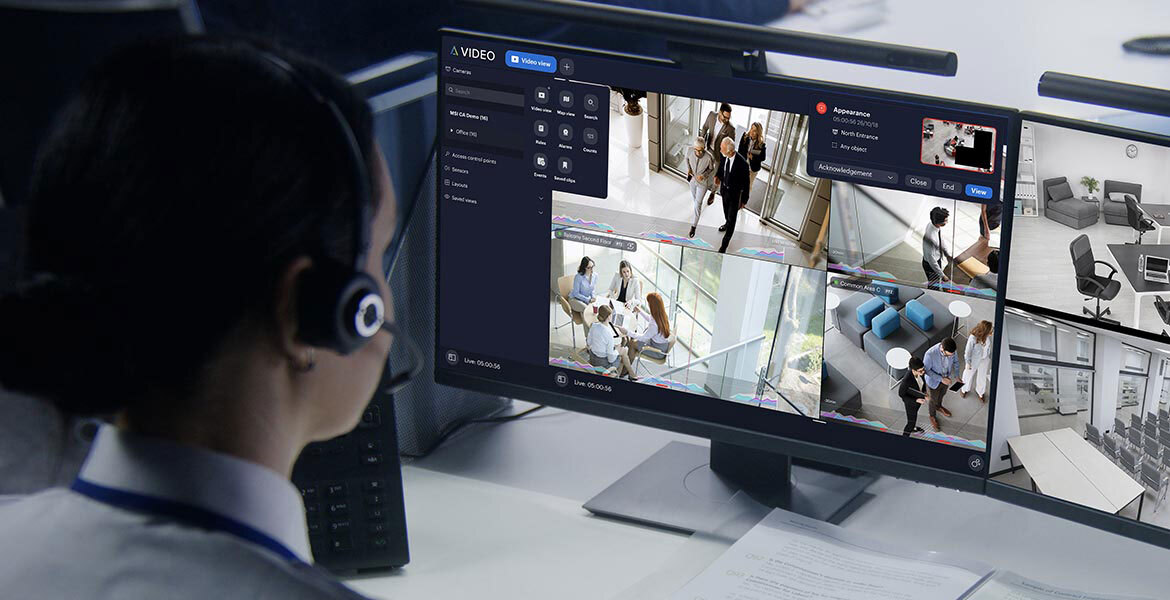
ISSs operate multiple technologies collaboratively through a centralized platform to create a united security ecosystem that enhances detection and response capabilities.
In industries such as manufacturing, studies have shown a strong positive correlation between integrated solutions and loss prevention, underscoring their ability to enhance organizational visibility and scalability amid a constantly developing security climate.
Here’s how ISSs work in practice:
1. Incident detection
An organization will connect various security technologies to work in tandem when detecting an incident. These can include security cameras, access control, smart sensors and other devices that work together to detect unusual activity rather than operating as isolated silos.
If a sensor is triggered, the ISS will cross-reference the data in real time to verify the threat and provide activity details to the responsible personnel. Detection events can include unusual movement, forced entry, changes in air quality or other general perimeter security breaches.
2. Incident verification
Upon threat detection, the solution’s centralized platform will immediately process the activity data and trigger an automated workflow configured by the organization’s security team. These processes include analyzing the severity of the situation, activating additional devices to verify threats and instantly notifying security personnel of the activity.
The system will analyze data to classify the incident and inform security teams with real-time activity for review.
3. Communication processing
The relevant and assigned personnel, such as security managers and building administrators, will receive instant notifications of an ongoing unusual event. The alerts can contain information about the incident, such as video data, the incident’s location and type, in real time.
Fast transmission to the centralized management system and detailed notification processing can help responsible security personnel make faster decisions regarding the incident.
4. Initiating a response
Many organizations will leverage the capabilities of their integrated security solutions to automate response mechanisms, quickly providing relevant systems and personnel with the data they need to react effectively to the incident.
However, some will require manual action, in which the system can provide responders with concise, palatable data from multiple devices about the incident, facilitating a quicker and more accurate response.
In emergency scenarios, the system can automatically alert the relevant authorities, such as law enforcement and medical services, to coordinate responses more quickly and minimize potential harm.
5. Documenting action
The centralized platform will log all activity data for further analysis, providing insights to support detection and response and inform decision-making. The resulting analysis can help security teams continuously improve security apparatus, workflows and response mechanisms.
6 benefits of integrated security solutions
As the global security landscape becomes more complex and sophisticated, organizations have more security bottlenecks than before. Cross-domain attacks that combine physical and cybersecurity breaches are becoming more common, straining siloed security technologies and making effective detection and response challenging.
Integrated security solutions have proven effective against these attacks, achieving higher detection rates than independently operating security technologies. The benefits of integration underscore success rates.
- Accelerated response: An ISS accelerates response times where all security components function together rather than independently. Mission-critical industries, where detection and response times can have a significant impact, benefit most from a system’s ability to react faster through connected, automated security mechanisms.
- Enhanced operational efficiency: Unifying and automating security infrastructure not only reduces labor burdens for security teams but also improves operational efficiency across the business. ISSs can detect health and safety hazards or support predictive maintenance of equipment.
- Resource optimization: Security administrators and business leaders can use data from all devices to make more informed decisions about resource allocation for both security and productivity. Examples include data that can be used to assign staff more effectively and optimize facility layouts for a better employee or customer experience.
- Improved scalability: Many integrated security solutions are designed with scalability in mind, where systems can adapt to current needs. Administrators can reassign security resources based on the current circumstances and risks facing facilities.
- Greater compatibility: Security risks and threats in facilities are continually evolving. Integrated security solutions are often compatible with both legacy and advanced technologies, enabling teams to implement them as needed and continuously mitigate threats while improving the overall security infrastructure.
- Achieve regulatory compliance: Laws and legal frameworks governing security apparatus are subject to rapid change. Centralizing your entire security system enables teams to make updates quickly and easily, ensuring compliance with evolving regulations.

Improve safety with integrated security systems
- Enhance overall situational awareness
- Accelerate responses and obtain insights
- Easy-to-use and future-proof solutions
- Trusted by 100,000+ organizations
How to plan and install an integrated security system
The global ISS market is expected to double from the current $17.6 billion to $46.1 billion by 2033, underscoring the pace of adoption. The functionality, effectiveness and overall benefits of integrated solutions can support the case for consideration, especially if your organization is seeing more sophisticated security challenges.
Security planners considering integrated solutions may ask how to implement one that fits their organization’s unique needs. Below is a general outline of how to plan and install a system:
- Conduct a security risk assessment throughout the business and establish needs.
- Define security goals and consider them against the available budget.
- Choose the core technologies that will make up your security system design (i.e., access control, security cameras, visitor management system, etc.).
- Establish system integration, including linking devices, detection events, creating automated workflows and uniting the interface for security team use.
- Plan the network and infrastructure to accommodate organizational needs, including mapping out facility security architecture, planning for outages and ensuring IT systems can support requirements.
- Deploy the integrated security solutions, continuously observe them to help ensure systems operate as intended, train staff on their use and make improvements and fixes as required.
Enhance safety through Avigilon’s integrated security systems
ISSs can significantly strengthen organizations’ security infrastructure, creating a comprehensive, flexible system that adapts to ever-changing risks and threats on both the cyber and physical fronts. However, systems should be easy to install, use and scale to the needs of your facilities.
Avigilon’s comprehensive, easy-to-implement solutions provide the integrated system that gives your organization improved visibility, enhanced situational awareness and data-driven capabilities for a more successful security strategy. Get a quote for your custom system and learn how an ISS can benefit your facilities.
FAQs
Have questions? We can help
Our video security experts can help you implement the right security system for your business.