What is physical security? Controls, methods and measures for commercial buildings

Trusted by 100,000+ organizations globally
Quick facts
- Definition: Physical security encompasses all active and passive measures designed to protect assets from damage, theft and unauthorized access.
- Examples: Key technological components include security cameras, access control systems, alarms and smart sensors. Critical non-technical safeguards involve physical barriers, regular patrols, emergency response drills, comprehensive training programs and ongoing risk assessments.
- Threats: The most frequent physical security threats include unauthorized access, theft, vandalism, workplace violence and targeted attacks.
What is physical security?
Physical security includes security measures designed to limit access to authorized individuals and protect personnel and property from damage. It involves securing organizational assets from harm due to physical events, including natural disasters like fires and floods, and human-inflicted dangers like theft and vandalism. Accidents and accidental damage are also covered by a physical security plan.
Effective physical security is a layered approach built on the following components:
- Access control: The systems and protocols used to verify identities and manage who can enter restricted areas (e.g., electronic key cards, biometric scanners, secure locks and custom credentials).
- Video security (CCTV): The use of video security cameras for continuous observation, detection of unauthorized activity and forensic documentation.
- Intrusion detection and alarms: Systems designed to detect unauthorized entry or suspicious activity and trigger an audible alert or contact security staff (e.g., door or window sensors, motion detectors).
- Security personnel: The human element, including security guards, strategically stationed at entry points and high-risk internal areas, providing a visible deterrent and immediate response capability.
- Facility hardening: Ensuring the physical environment and deployed equipment are robust and resilient, able to withstand impacts, environmental extremes and common breach attempts.
- Emergency response and training: The written procedures and practical drills that ensure staff are trained and prepared to respond effectively to common threats, security breaches and emergencies.
- Site design integration: Planning the placement of security equipment and physical barriers to complement the facility’s architecture, maximizing security coverage.

Get your free security guide
You’ll learn:
The top physical security threats
Key physical security measures to implement
How to uncover risks on your site
Best practices for your specific security plan
Key physical security measures
When it comes to preventing different types of physical security threats in any facility, there are many types of innovations that you can use — from encrypted access card systems and security cameras to mobile credentials and temperature sensors. But before you use any of these systems, it’s important to understand the different elements that can contribute to your overall plan.
When creating a physical security strategy, you need to have all your security measures complementing one another. This means that you need to use different types of physical security measures in a layered approach to ensure that you’re protected from every angle.
So, what is good practice for physical security? Here are the most common elements in an effective physical security plan:
Deterrence: This type of physical security technology focuses on keeping unwanted people, vehicles or animals away from a certain area. Deterrence can encompass various equipment such as signage, security cameras and door access systems. It also includes physical barriers such as doors, locks and walls. It is essentially any security systems or equipment that can help deter intruders from entering sensitive areas.
Detection: Deterrents can only do so much. If you want to fully protect your facility, you need to have devices that can identify potential intruders and ways to alert the correct authorities. Some technologies you can use for physical security detection measures are sensors, alarms and automatic notifications via video management software.
Delay: Several physical security controls are created to slow intruders down when breaking into a facility. Simple security measures such as additional doors, locks and security guards can help delay incidents. More advanced physical security technology, such as key card access and mobile credentials, can make it more difficult for unauthorized users trying to enter a building. With this technology in place, it’s easy to mitigate a breach before too much damage is caused.
Response: Once a breach or intrusion happens, you must also have a response strategy in place, such as building lockdowns or automatically notifying emergency services.
Successful and effective plans should include these technologies to ensure that a facility can prevent physical threats and take necessary action if a security breach occurs.
Components of physical security controls and systems
Physical security controls fall into five main areas of concern: access control, video security, sensors and alarms, personnel and organizational policies. How well these security components function can make or break your physical security program. Their performance can also indicate how well your plan was implemented, where to improve and what to maintain.

Access control
Access control employs various measures, from physical obstructions like walls and gates to electronic access control solutions, to restrict entry to high-risk assets. Physical access control systems enforce this by requiring users to present unique credentials, such as key cards or biometrics, to a stationary reader before granting entry to secure areas.
Common types of access control credentials include:
- PIN codes: Numerical codes issued to users and input into access control readers
- Key cards/fobs: Employee ID badge systems, RFID cards and commercial key fobs
- Mobile credentials: Digital permissions sent straight to users’ smart devices
- Biometrics: Facial recognition, fingerprint and behavioral information
Surveillance tools and technology
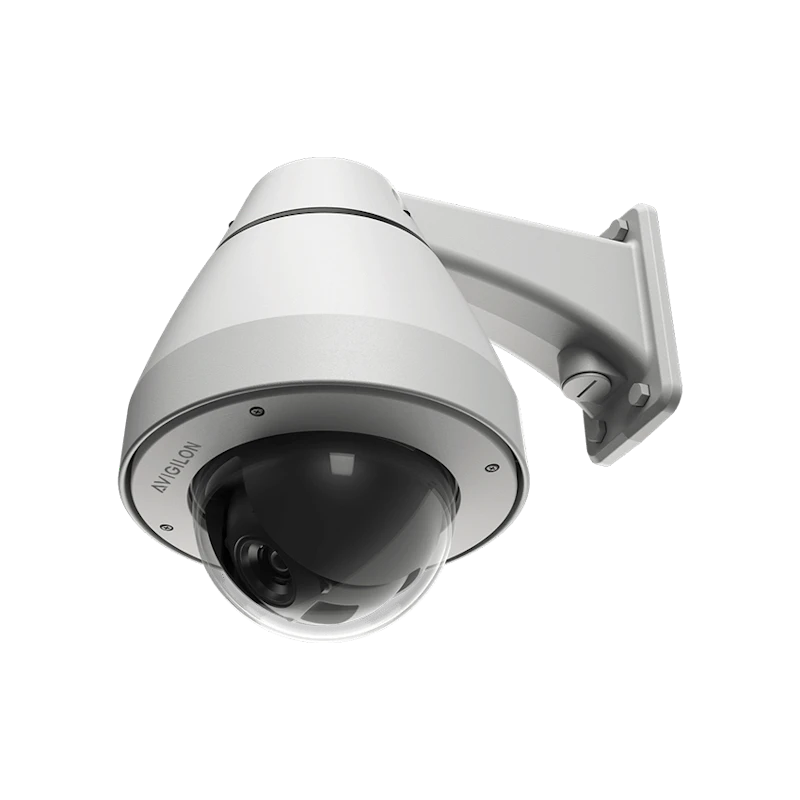
Commercial surveillance systems are essential for detecting, deterring and documenting security risks. Cameras are strategically positioned across premises, providing on-site or remote operators with live feeds and recorded footage. Specific types of security cameras are better suited for particular applications. For example, bullet cameras excel at capturing long-range footage, while dome cameras are effective for wide-angle coverage. Additionally, integrations with AI video analytics and tools, such as license plate recognition camera software, extend their function to support broader security uses.
Common surveillance technology components include:
- Video cameras: The hardware, encompassing various specialized types such as bullet, dome, turret and panoramic security cameras.
- Video Management Systems (VMS): The digital platform used for the centralized storage, management and retrieval of video data.
- AI video analytics: Video analytics software that enables cameras to intelligently analyze footage, automatically identify physical security risks and trigger automated responses.

Sensors and alarms
Intrusion detection systems leverage a variety of Internet of Things (IoT) sensors to collect information about emerging physical security threats and trigger automated responses. These sensors can be linked directly to alarms and integrated access control systems. Operators maintain control by setting unique activation thresholds to address site-specific needs. Common IoT sensors in physical security include:
- Motion sensors: Detect suspicious movements, particularly outside high-risk or restricted locations.
- Sound sensors: Specifically detect significant audio events, such as breaking glass, gunshots or raised voices.
- Heat sensors: Primarily used to detect fires and identify potential faults or overheating in industrial equipment.
- Occupancy sensors: Provide data useful for building management and public safety operations.
- Cigarette smoke and vape detectors: Enforce facility policies against smoking and vaping in prohibited areas.

Security personnel
Physical security personnel are crucial for providing a physical presence that deters crimes and for actively managing and adjusting security systems. Their duties, including on-site patrols, regular risk assessments and investigations, actively reinforce the security posture and maintain the effectiveness of current corporate physical security measures.
Core roles and responsibilities of security personnel include:
- Security guards: Patrol the premises and provide immediate, on-the-ground response to identified threats.
- Front desk security staff: Oversee and manage daily access control operations at entry points.
- CCTV operators: Continuously view, analyze and respond to incidents captured via video security footage.
- Chief Security Officers (CSO): Lead all security activities, enforce company policies and implement long-term security changes.

Policies
Physical security policies are documents that detail the rules, guidelines and best practices for accessing secure areas and navigating high-risk assets. Facility operators and security teams must work collaboratively to plan, implement and ensure adherence. These policies must be regularly reviewed and updated, using findings from incident reports and risk assessments, to combat new threats and reduce vulnerabilities.
Examples of common physical security policies include:
- Zero trust: Requires continuous verification of credentials while personnel are on-site, rather than relying on a single initial check.
- Perimeter security: Specifies that all facility perimeters must be continuously observed for signs of suspicious or unauthorized activity.
- Emergency response: Clearly outlines procedures for staff and visitors on how to safely shelter in place or evacuate during an incident.

Secure your space with Avigilon
Trusted by 100,000+ organizations worldwide, Avigilon’s easy-to-use security cameras, access control, video management systems and safety solutions offer future-proof flexibility to fit every business.
Common threats to physical security
In the modern era, physical security threats originate from multiple sources, encompassing physical breaches, cyberattacks and natural disasters. Many threats target both physical and digital assets, making it important to develop comprehensive protection plans.
Common threats to physical security include:
- External threats: Outside parties with malicious intent choose to vandalize buildings, steal assets or harm occupants. External threats can include property damage, theft and unauthorized access, with FBI data revealing commercial properties were the second-most common location for burglaries across the U.S. between 2022 to 2024.
- Internal threats: People with access to and knowledge of a business may choose to commit offenses, or employees may unintentionally expose sensitive assets by failing to follow security protocols. Internal theft alone costs U.S. businesses over $50 billion per year, illustrating the importance of maintaining strict physical security policies.
- Natural threats: Physical security threats are not always perpetrated by individuals, as environmental incidents also pose a risk to people and property. Earthquakes, floods and storms can cause damage and blackouts that impact both physical and digital infrastructure. Security teams must factor these possibilities into policy design.
- Emerging threats: The physical security landscape constantly evolves in response to new technologies and trends. Emerging threats, such as AI-informed cyberattacks and infectious diseases, expose new vulnerabilities in legacy protections, making it crucial for physical security teams to regularly reassess and strengthen existing measures.
Why cyber and physical security convergence matters

As physical and digital assets become increasingly interconnected, the threats targeting both systems are growing more complex. Cyber and physical security convergence is the strategic solution, as it involves businesses integrating their digital and physical security systems to strengthen their overall defenses.
Research indicates that approximately 60% of organizations already operate security systems that are fully or partially converged. Additionally, over 40%of companies are actively increasing their deployment of cyber tools, such as advanced analytics and network security, within their physical security environments.
The practical reasons for pursuing cyber and physical security convergence center on improving security effectiveness and operational efficiency:
- Improved threat detection: Integrating both systems gives operators a unified, holistic view of their organization’s defenses. This allows teams to quickly identify and address anomalies that span both the digital and physical realms, spotting emerging threats faster than before.
- Efficient incident management: A unified view of all systems helps security professionals observe threats as they develop. This single platform allows operators to effectively coordinate planned responses, ensuring that actions taken on one side don’t negatively impact the other.
- Better knowledge-sharing: Converged security teams break down traditional silos. They develop operational policies with both physical and digital interests in mind, fostering a culture where knowledge-sharing is prioritized to promote agile and comprehensive business security operations.
- Reduced operating costs: The process of merging systems helps identify and remove unnecessary overlap between different teams and technologies. This streamlining effort improves cost efficiency by optimizing security operations without sacrificing the quality of service or protection.
- Simplified compliance management: Convergence makes it easier for operators to verify that both digital and physical systems meet complex regulatory requirements. It ensures that functions across one system do not lead to compliance breaches in the other, simplifying auditing and risk management.
10 best practices for physical security
While a truly effective physical security strategy must be tailored to an organization’s unique risks and challenges, a few core principles benefit nearly all use cases.
Below are ten essential best practices for establishing and maintaining a robust physical security posture:
- Deploy dedicated security personnel: Stationing security guards at high-risk areas and access points serves as a visible deterrent. Simultaneously, CCTV operators ensure suspicious activities are identified and Chief Security Officers manage strategic operations and policy adherence.
- Conduct frequent audits and testing: Regular security audits, including site surveys, equipment tests and penetration testing, are crucial. These reviews help security teams proactively strengthen existing defenses and optimize systems against current and new physical security threats.
- Strictly control property access: Use commercial access control systems, intercoms and comprehensive management platforms to restrict and record all access events. Staff and visitors must be issued custom credentials that strictly limit their access to only necessary areas.
- Adopt smart security systems: AI-driven security camera systems allow operators to receive real-time alerts about potential threats and view live feeds remotely. This capability ensures that on-site teams can respond to incidents promptly and effectively.
- Create defensive layers: Secure sites with layered security measures. This approach includes passive obstructions, like fences and barriers, active technologies, such as access control and CCTV systems, and critical operational measures like zero-trust policies.
- Integrate alarms and sensors: Connect smart environmental sensors to wider security devices, including alarms and access systems. This integration alerts security teams of emerging threats and automatically engages pre-programmed incident responses.
- Pursue cyber and physical convergence: Given the increasing link between digital and physical infrastructure, convergence is vital. Integrating security systems addresses threats across both domains.
- Establish clear response plans: Ensure that all employees and guests know precisely how to respond to identified threats swiftly and safely. Response plans for common incidents, like break-ins, violent attacks, fires and blackouts, must be easily accessible in physical and digital formats.
- Educate the wider employee base: Provide regular, comprehensive security training to all employees. This practice reinforces physical security policies and best practices, significantly limiting the likelihood of errors that could otherwise expose vulnerabilities in both digital and physical systems.
- Prioritize continuous improvement: Threats, vulnerabilities and attacker methods are constantly evolving. Security teams must regularly review and refine all active security measures to prevent stagnation and ensure that the organization’s defenses remain robust and effective against changing risks.
Final thoughts on physical security plans, systems and solutions
Every business is unique, and so are its physical security requirements. Again, there is no one-size-fits-all approach that can protect all aspects of your business, so it’s critical to ensure that your physical security plan is tailor-fit to your organization and facility. Understanding what physical security is, as well as what robust physical security standards are, is a good start.
As physical and digital worlds continuously overlap, you need a trusted partner that helps you navigate both. Conduct a thorough physical security risk assessment, and consult with a professional to get the most out of your physical security systems and technology.
Physical security FAQs
Have questions? We can help
Our video security experts can help you implement the right security system for your business.