Trusted by 100,000+ organizations globally

Single Door Controller
The Single Door Controller simplifies installation with Power-over-Ethernet (PoE) and is ideal for small offices.
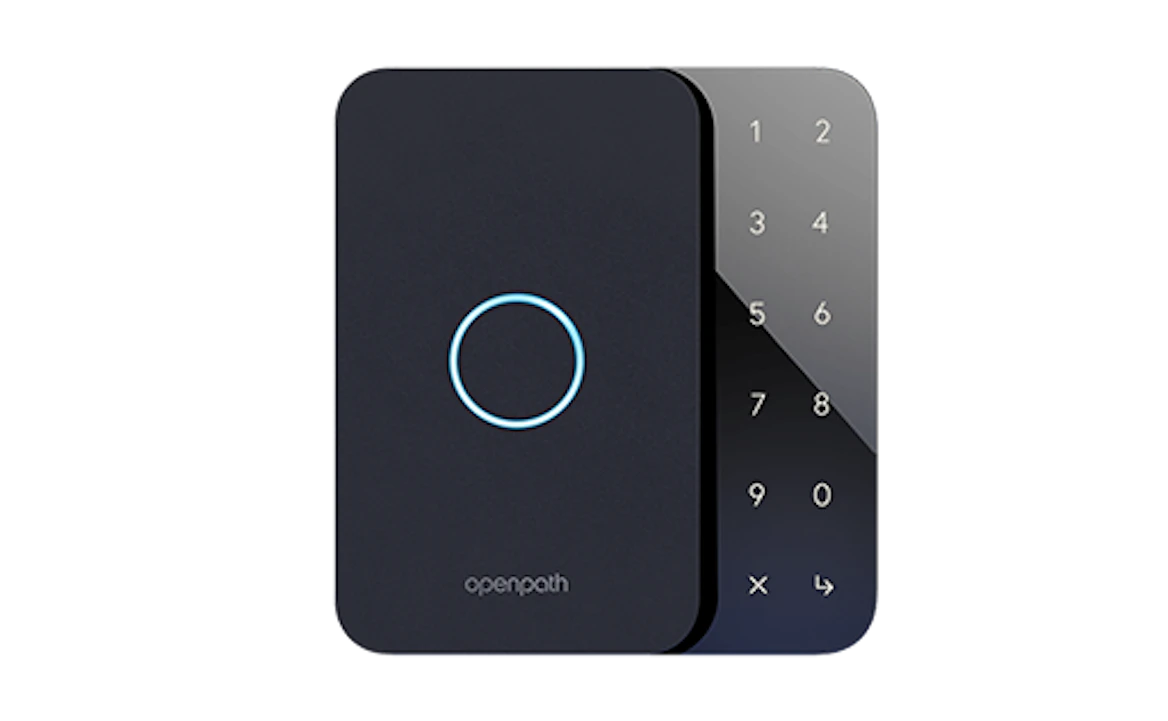
Standard Smart Keypad Reader
The Smart Keypad Reader revolutionizes PIN access. It is designed for ease of use and built to last with durable features.

Mullion Smart Reader
The Mullion Smart Reader leverages advanced technology and a sleek design for surface mounting where space is limited.

Video Intercom Reader Pro
Multi-technology reader with AI intercom and Virtual Directory capabilities adds enterprise-grade call routing to any entry.

Avigilon Alta Access System
The cloud-based Avigilon Alta Access is fast, flexible and future-proof with mobile capabilities and intuitive software.

Avigilon Unity Access System
Avigilon Unity Access is a scalable, on-premise access control system for enterprise-grade installations.
Choosing the right door access control system for a business is an important decision, especially when
almost 90% of organizations are experiencing a rise in physical security threats.
When planning access control upgrades, leaders must consider a wide range of factors, such as costs, clearance level requirements, compliance and scalability, while ensuring planned solutions are smart and easy to use. To help leaders plan effective security updates, here’s how to choose the best door entry system for your business.
What are door access control systems?
Door access control systems are electronic security solutions that help prevent unknown persons from entering private facilities. A well-implemented commercial door access control system can improve safety and security by preventing unauthorized individuals from accessing high-risk areas and all entry events are automatically recorded for auditing purposes.
How does it work?
Door access control systems work by keeping doors locked until a person with verifiable access credentials interacts with the system. To gain access to a locked area, a person must present a valid key card, fob, PIN code or other form of identification to a hardware device installed at the door. If the credential is accepted, the doors will be unlocked and access will be granted.
A typical security access control system workflow will involve:
- Entry requests: A person will approach the entry point and present their credentials to a reader installed on the outside of the door.
- Verification: The reader will receive the credential data and send it to an access control door controller to determine the request’s validity.
- Authorization: If the credentials are accepted, the controller will signal the system to unlock.
- Event logging: The date, time and location of the event, as well as the credentials involved, will be recorded and stored in a management system for auditing purposes.
The key components of a door access control system
A door access control system will use multiple hardware and software components to lock doors, assess entry requests and record events. To identify an appropriate door security system for your office or workplace, it’s important to understand each component and its intended purpose.
Credentials
Access credentials are physical or digital identification tools issued to authorized individuals and used to request entry. Credentials can be physical tokens, such as key cards or fobs, digital-based, like mobile credentials, or biometric information, including iris or fingerprint data.
Readers
Access control readers are installed on doors and used to scan credential information. Authorized persons must present their credentials to a reader to request entry to a locked room; readers are the main component of the commercial door entry system that users interact with.
Controllers
Access controllers are physical panels installed throughout the property that act as the brains of the IP door access control system. When an entry request is made, credential data is sent to the controller, compared against the system’s ruleset and the request is confirmed or denied.
Door locks
Electronic locking mechanisms are used to hold doors shut between valid entry requests. A typical door entry system for a business will leverage magnetic locks or electric strike locks. Mag locks require power to stay locked and are fail-safe; while strike locks require power to unlock and are fail-secure.
Software
Access control management software is the interface that system operators use to set rules, create credentials and adjust permissions. Property managers and security teams can access the software remotely to view system data and investigate access events in real time.
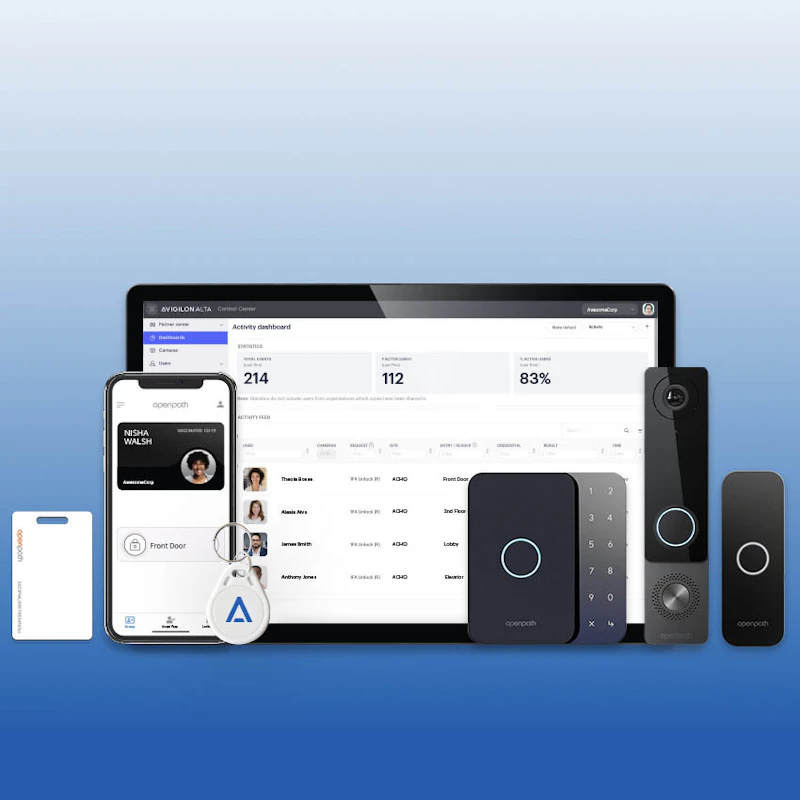
The leading access control system
- Seamless integration with existing infrastructure
- AI-powered with real-time alerts
- Secure mobile, key card, PIN and fob credentials
- 100% serverless and remote management options
- Easily scales as your business grows
Which entryways benefit from door access controls?
Not all doors in a property are used in the same way. Different types of door access control systems for offices, stores and other commercial facilities may be necessary to appropriately secure different parts of a building. During the planning process, it’s important to consider which doors need to be secured and how those access points are commonly used by staff and visitors to help identify appropriate hardware.
Perimeter gates
Perimeter gates are often the first line of defence against intrusion, so they must be well-secured behind visible commercial door access control systems. However, they must also provide seamless access for staff and visitors, on foot and in vehicles, frequently throughout the day.
Main entrances
Main entrances typically have the highest traffic volume and must be freely accessible to a wide range of people. An ideal commercial door entry system for this use case will grant entry with minimal physical contact for large numbers of different people.
Amenity access
Door access systems for on-site amenities, like gyms, pools and meeting rooms, will be designed to handle high traffic at specific times of day while remaining reliably secure at all times, preventing people who have not pre-booked appointments from entering each area.
Storage rooms
Storage rooms must be easily accessible to staff during working hours, but typically not used very frequently. In some situations, high-security protections may be appropriate, such as controlling access to hazardous cleaning products or keeping records of entry to stockrooms.
High-security doors
High-security areas, such as server rooms, file storage rooms and areas housing valuable assets, will be accessed infrequently by a few people. Speed and ease of access will not be a priority here, as preventing intrusions will be the most important objective.
Elevators
Elevator doors in commercial and multi-tenant residential buildings are high-traffic access points that must be easily accessible to a wide range of people. In some instances, such as in shared offices and hotels, access to select floors must be restricted and observed closely.
Emergency exits
While emergency exits may be used infrequently, when they are required, they must be easy to open. Additionally, building regulations and industry standards typically require door entry systems for emergency exits to meet specific safety requirements.
How to choose the right credentials for door entry systems
With a good understanding of how different types of entrances are commonly used, property managers and security teams can identify the right credentials for each commercial door entry system in their facility. When choosing credentials, stakeholders must consider how each door is used daily and the level of security required to keep people safe.

PIN code readers
PIN code and keypad-based access control systems are cost-effective and easy to use, making them a good choice for low-risk areas like storage closets. Those who need to open the door will not require personalized credentials and so can access the area independently.
However, only one PIN can be active at a time. Therefore, these types of door security systems for offices and commercial facilities are not suitable for areas where events must be recorded. Additionally, staff must update the PIN regularly, as wear on the pad can make it easy to guess active credentials.

RFID cards and fobs
RFID cards and fobs are small physical tokens that can store unique credential information on an internal chip. Each token can be granted unique permissions and issued to authorized persons, enabling operators to control access to select areas while logging all access events.
An access card system or key fob system is well-suited for high-traffic doors like main entrances and communal areas. Authorized persons can gain touchless access by holding their card up to a stationary reader, helping ensure swift access in busy environments.

Video intercoms
Perimeter gates and access road barriers can be effectively secured using video door entry systems. These solutions allow anyone to request access by interacting with the intercom while enabling on-site staff to visually verify events remotely.
Intercom systems can be paired with License Plate Reader (LPR) cameras and token-based commercial gate physical security systems to grant seamless access to employees and contractors, while still enabling visitors to request access via a direct link to staff.

Mobile credentials
Mobile access door entry systems remove the need for easily lost tokens like key cards and fobs by controlling entry using digital credentials. Operators can send credentials to users’ smartphones, which can then be held up to a door-mounted reader to request access.
Mobile credentials can be used to grant touchless access to high-traffic areas like employee doors and main entrances. They can also be linked to visitor management systems and used to grant traceable, time-based access to on-site amenities such as meeting rooms and gyms.

Biometric credentials
Biometric systems use user-specific personal data like fingerprint, iris and facial recognition scans to control access to private facilities. As biometric data is difficult to fabricate, these types of commercial door access control systems generally provide the highest level of security.
Biometric access readers are typically used to secure high-risk areas like server rooms and vaults. Biometric door entry systems for businesses can also be combined with key card systems and mobile credentials to develop multi-factor authentication in high-security environments.
Installation considerations for door access control systems
To make effective use of chosen access control hardware and credentials, property owners and security teams must ensure each access point supports installation.
Different types of credential readers, locks and controllers have different power, networking and infrastructure needs. Therefore, it’s critical to review existing systems, identify required upgrades and work with an access control installer to ensure planned solutions function effectively.
Power requirements
Commercial door access control systems need to be powered continuously to function effectively, so ensure each access reader is connected to a suitable power source. Stakeholders should work with installation professionals to calculate the total load of the system and ensure power supplies can account for ≈20% extra capacity.
Consideration must also be made to ensure backup generators are available to power door access controls during outages. Teams must also consider the varying needs of mag locks and electric strike locks, alongside the benefits of fail-safe vs. fail-secure lock systems.
Door hardware
Typically, physical aspects of the entry point will need to be adjusted to safely accommodate new system hardware. Entryways must be assessed to identify required modifications to door frames and surrounding infrastructure to accommodate new components like door locks, credential readers and power and network cables.
Wired vs wireless systems
In some cases, existing wiring infrastructure may support upgrades to the proposed door security system. However, updated network and power cables may be required to operate some newer commercial door entry systems, necessitating costly and time-consuming electrical installations.
In situations where physical or financial limitations make it impractical to install new cables, it can be worth exploring a wireless access control system and single-door access control systems. These types of solutions typically require a single power supply and may not need to be physically linked to wider components such as controllers, reducing wiring requirements.
Integration capabilities
Installations will also need to account for desired integrations. Teams must ensure the required physical and wiring infrastructure can accommodate connections to other security and building management technologies, such as video security, smart sensor and alarm systems.
System management
Access control systems can be managed via on-premise or cloud-based security management solutions. Each solution has its own pros and cons, so it’s important to consider the unique requirements of each installation prior to identifying desired components.
On-premise solutions typically provide more customization and stronger data security at the cost of higher maintenance requirements, as physical servers must be installed on-site. Cloud-based access control solutions can be managed and accessed remotely without on-site servers, but are reliant on a stable internet connection.

Download your free 2026 guide to access control
- The fundamentals of access control technology and how it works
- Important access control components and configurations
- Key considerations when choosing an access control solution
- Complete checklist for successful implementation
Cost considerations for door access control systems
Door access control systems for businesses are typically priced by door. Access solution manufacturers often estimate total costs based on chosen hardware and the number of doors to be secured, but various additional factors can influence access control system pricing.
Key cost considerations for commercial door access control systems include:
- Number of doors: Providers will calculate a cost per door figure based on the chosen hardware, then factor in the total door count to estimate project costs.
- Number of controllers: One door controller is required for every 4 – 24 readers, potentially raising costs for large multi-door access control systems.
- Credentials: The cost of purchasing and replacing lost, stolen or damaged credentials must be factored into the cost of token-based systems.
- Electrical upgrades: If the existing wiring infrastructure cannot support new door access control hardware, stakeholders will need to factor in running new cables into the total costs.
- System architecture: Upfront and ongoing maintenance costs must be considered for on-premise systems; monthly subscription fees must be considered for cloud systems.
- Software and licensing: Stakeholders will often be required to pay a licensing fee to use proprietary management software associated with the system.
Common mistakes when planning door access control systems
Planning and implementing an effective door access control system for an office or other place of business will require more than selecting appropriate hardware and managing costs. Several factors can affect the efficacy of door entry systems for a business if neglected during planning.
Common mistakes to avoid when planning include:
- Inadequate risk assessments: Without a thorough physical security audit, teams may miss exploitable weaknesses that could leave commercial door entry systems vulnerable to breaches.
- Inappropriate credential choice: Opting for simple credentials at high-risk areas or overly complex credentials at high-traffic points could cause issues during operation.
- Improper installation: Any misalignment in door access control locks or a fault in the system’s wiring could leave doors unsecured and vulnerable to unauthorized access.
- Power supply issues: Failure to properly calculate power requirements or install backup generators can leave doors unsecured during surges and power outages.
- Overlooked integrations: Integrations between door access systems and devices, such as cameras and alarms, can help address unforeseen issues during operation.
- Lack of scalability planning: Failing to choose a scalable door access control system for a business can make it difficult to meet security objectives as needs change.
Features to look for in the best door access systems
As a final consideration, knowing which key features to look for in the best door access systems for offices and other commercial facilities helps ensure your solution is secure and easy to use.
Key features to consider include:
- Remote management: Cloud-based management software enables operators to create credentials, adjust permissions, review access events and initiate a lockdown plan from anywhere 24/7.
- Integration support: Choose open API and ONVIF-compliant solutions to support integrations with broader security devices such as cameras, sensors and alarms.
- Lockdown capabilities: Automated lockdown functions can enhance lockdown plans for schools, offices and other facilities.
- Real-time alerts: Systems that send real-time alerts to security staff via email, SMS or through remote access management portals can drive swift responses.
- Automated audit trails: Commercial door entry systems that automatically record all access events can help operators to improve auditing and security investigation processes.
- Personalized dashboards: Customizable dashboards help operators manage commercial access control around site-specific workflows to improve security outcomes.
Which industries benefit from door entry systems?
The ability of commercial door entry systems to deter intrusions and improve visibility into access events can provide significant benefits to many kinds of organizations. Below are some examples of how these systems are commonly used across major industries.
Service sector businesses
Door security systems for offices help service sector businesses prevent intrusions while providing convenient access to staff and guests. Businesses operating in shared offices use these systems to restrict unit access, while those working from private office buildings use multiple types of access systems and readers to secure high- and low-risk areas.
Retail and hospitality
Retail and hospitality businesses use access control systems to restrict staff and prevent public access to stockrooms, back offices and cash-handling areas. These systems enable business owners to grant permissions based on employee roles, as well as review audit logs, investigate suspicious events and revoke credentials when required.
Healthcare and education
Access control systems are a critical security measure in healthcare, school and college environments where staff are required to safeguard vulnerable persons and confidential data. The systems restrict access to high-risk assets such as medications and patient/student records, help to deter intruders and can facilitate security responses like automatic lockdowns.
Warehousing and logistics
Warehouse and logistics businesses use access control systems to protect valuable goods and provide insight into staff movement across high-traffic, complex logistics facilities. They enable leaders to restrict access to stockrooms and high-risk machinery, provide seamless property access to employees and grant temporary, role-specific access to independent contractors and couriers.
Government and critical infrastructure
Operators of government agencies can leverage access control solutions to restrict entry to high-security areas and grant temporary access to contractors and visitors. They are particularly beneficial at unmanned critical infrastructure such as substations and solar farms, as they help to deter intruders and log unalterable entry records.
Final considerations for door access control systems
If you need to safely manage multiple entry points, offer varying levels of access to different people, regularly grant temporary access to guests or need a reliable way to protect valuable assets, a modern multi-door access control system may be the right choice for your business.
Avigilon offers a range of flexible cloud-based and on-premise door access systems that can be tailored to your unique needs. Our scalable solutions support multiple touchless credential types, remote management and intelligent video security, sensor and alarm system integrations.
Provide seamless, secure access to staff and guests with Avigilon. Click here for a free quote.
FAQs
Comprehensive access control system reviews
Have questions? We can help
Our video security experts can help you implement the right security system for your business.