How facial recognition in retail is changing the industry


Trusted by 100,000+ organizations globally
For a constantly evolving industry like retail, protecting assets while delivering great customer experiences is crucial to business success. Retailers must continually address significant challenges, ranging from preventing theft to gaining insights into shopper behavior.
That’s where artificial intelligence (AI) technology, such as facial recognition cameras, can help. This technology uses AI to identify individuals in images or video. It also allows operators to match faces against those stored in databases.
In retail, facial recognition software can analyze an individual’s face for security purposes and/or to enhance the in-store customer experience.
This guide explains how retail facial recognition works, the reasons for its increasing popularity, various use cases and key privacy and safety considerations when leveraging the technology.
How does retail facial recognition technology work?
Retail facial recognition technology works by:
- Using security, mobile or POS cameras with built-in or supporting facial recognition capabilities to capture images or video of an individual’s face.
- The image or video is then analyzed for unique facial features. It involves measuring the distances between key points such as the eyes, nose and mouth.
- This information is then compared against known faces stored in a database.
- A facial recognition-enabled security camera identifies or verifies individuals in real time.
The accuracy and reliability of facial recognition technology are enhanced by utilizing machine learning algorithms that can analyze faces from various angles, in different lighting conditions and with minor obstructions.
When this video analytics technology is implemented in a security system, retailers can leverage its capabilities to support security operations and improve the customer experience.

Unlock real-time insights with smart video analytics
- Detect objects, vehicles and persons of interest
- Identify individuals with facial recognition analytics
- Analyze customer behavior to enhance profitability
- Get real-time alerts of suspicious activity
The rise of facial recognition in retail
The increasing popularity of facial recognition in retail is due to two main factors: a rise in retail crime and a need to enhance the customer experience.
The issue of theft has reached a critical point for food retailers in the United States and the United Kingdom. According to recent research:
- 65% of 300 retailers reported that the impact of theft has reached a crisis level.
- 38% indicate that theft is a greater concern now than it was a year ago.
Of all the security tools available, these retailers reported facial recognition as “the most effective crisis response tool”. In the future:
- 42% of the retailers surveyed plan to deploy AI security cameras.
- 36% plan to introduce facial recognition technology.
While statistics around the quantitative impact of face recognition in retail for security and customer experience purposes are limited, some sources have claimed that the technology can reduce theft by 35%.
Security uses of facial recognition in stores
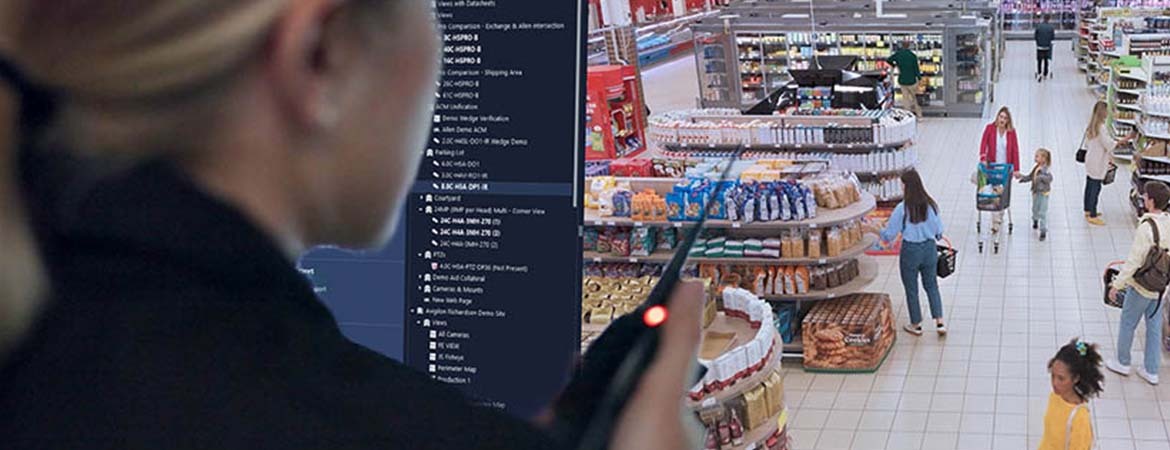
Retail stores have been a prime target for theft and shoplifting incidents, resulting in increased costs, revenue loss, heightened safety risk and reputational damage.
Traditional security measures, including security personnel, analog cameras and EAS scanner gates, are insufficient to deter and prevent criminal activities in and around retail stores. However, with facial recognition technology, retail stores have an added security measure that can transform their operations.
Deters threats
Facial recognition-enabled security cameras have been proven to be an effective deterrence against criminal activity. Their visible presence more often than not makes criminals think twice before committing a crime, knowing that their identity and actions are being captured in real time.
Additionally, retail security cameras with face recognition technology in retail stores can analyze behaviors. For example, the software can detect and alert management and security personnel of loiterers near valuable items or individuals frequenting specific aisles. These automatic alerts enable the store’s teams to respond quickly and help prevent shoplifting and retail theft from happening.
Identifies repeat offenders
Retail facial recognition cameras can identify known criminals with a history of shoplifting who are entering a store. The cameras can capture faces in real time and the software matches them to an existing record stored in a database that houses known and repeat offenders.
The video security system will send automatic alerts to store managers and security personnel, enabling swift action and helping prevent criminal activity.
Streamline investigations
Retail facial recognition software can quickly identify shoplifting suspects, which saves time and resources during investigations that would otherwise be spent sifting through hours of footage.
Furthermore, if the commercial video security system is integrated with local law enforcement databases, retailers can facilitate the quick identification and apprehension of criminals, thereby reducing repeat offenses and fostering stronger relationships with law enforcement.

Is your store secure?
Use our free security guide and checklist to improve your store’s security posture. You’ll learn:
- Top security threats and challenges
- Key security system considerations
- Comprehensive strategies and best practices
- A complete itemized security checklist
How facial recognition in retail improves customer experience
Retailers work tirelessly to engage with customers, hoping to persuade them to purchase their products and have an enjoyable shopping experience. With advancements in retail video analytics and AI, an increasing number of store owners and managers are leveraging facial recognition technology to enhance the customer experience.
Personalized offers
Face recognition software in retail stores can be used to analyze customer demographic data, such as age and gender. This information enables retailers to understand customers better and optimize marketing operations, allowing them to deliver personalized offers and encourage customers to purchase their products.
Additionally, advanced facial recognition technology in stores can help retailers identify when loyal customers or membership holders enter the premises. As a result, when combined with preferences and purchase history, retailers can offer personalized recommendations, creating a more engaging shopping experience.
Optimize traffic flow and layout
Retail face recognition software can also be utilized to follow customer movement in a store, understand which aisles are visited most and the products that garner the most attention. With this information, retailers can optimize store layouts and product placements, including placing high-profit margin products in the most frequented aisles to increase revenue.
Seamless shopping experience
For stores with self-checkout systems, it is challenging to ensure customers properly use the technology and provide a seamless purchase experience. One way in which facial recognition technology can help is by supporting the purchase of age-restricted items, such as alcohol.
The facial recognition software can identify a customer’s age, verify their purchase and enable the customer to proceed without waiting for staff verification. This boosts convenience for customers and allows retail staff to focus on other tasks that require their attention rather than manually verifying a customer’s age at self-checkout machines.
Privacy considerations of leveraging facial recognition in stores
Facial recognition offers clear advantages for retailers. However, its implementation requires careful consideration of privacy. As a result, store owners and management must prioritize transparency and maintain ethical practices when utilizing this technology.
The following steps are key to maintaining privacy:
- Communicate the use of facial recognition: Help ensure compliance with regulations and build customer trust by being transparent about the use of facial recognition technology. This should be achieved through clear signage and comprehensive policies.
- Implement robust data security: Due to its sensitive nature, facial recognition data requires strong protection. It is crucial to encrypt this data, store it securely and collaborate with trustworthy vendors that provide stringent cybersecurity measures.
- Define the purposes: To protect customer privacy, clearly specify the use of facial recognition in retail, whether it’s for security or for improving the customer experience, and limit data collection to only what is essential for that defined purpose.
Conclusion
Facial recognition technology is rapidly becoming an indispensable tool for retailers. It is a powerful solution for addressing challenges, from combating retail crime to delivering a personalized customer experience.
Whether you’re a loss prevention manager seeking to secure assets or a customer experience leader looking to enhance customer engagement, understanding how retail facial recognition works and its use cases is key.
By embracing technology that prioritizes ethical data handling and customer transparency, retailers can leverage the software to help ensure both safety and efficiency. More so now than ever before, the question is no longer what stores use facial recognition, but how quickly retailers will adopt this retail security technology to stay ahead in a competitive and evolving market.
Have questions? We can help
Our video security experts can help you implement the right security system for your business.