Data center physical security: key standards and risks

Trusted by 100,000+ organizations globally
Data centers have quickly become the backbone of modern organizations, giving teams access to critical data and applications through remote servers. As more workflows and information migrate to these environments, securing them has become a top priority for business leaders.
Any lapse in physical security in data centers can have serious consequences. Server downtime alone can cost large organizations up to $9,000 a minute, while intrusions, data breaches and equipment failures can halt operations altogether.
Protecting the assets inside your data center is essential to safeguarding business continuity. This guide covers everything you need to know about securing servers and network equipment in your organization, including the most common threats, the key elements of effective protection and strategies for building a stronger data center physical security.

Complete physical security for data centers
- Protect infrastructure from evolving threats
- Automate alerts for faster incident response
- Combine video, access control, and analytics
- Reduce risks with cybersecure, compliant solutions
What is physical security in data centers?

Physical security in data centers refers to the combination of technologies, personnel and physical barriers that protect servers and other critical hardware from unauthorized access, tampering or damage. It’s an essential part of a broader security plan and works with cybersecurity to protect an organization’s infrastructure from both physical and digital threats.
Here are the key elements that make up a data center’s physical security:
- Perimeter security: Data centers hold valuable assets that need layered protection. Perimeter security includes fencing, barriers and secured entry points to prevent unauthorized access before intruders reach sensitive areas.
- Security personnel: A strong security strategy combines people and technology. On-site guards and security personnel help supervise activity, respond to alerts and provide an additional layer of protection for servers and other critical hardware.
- Camera systems: Networks of security cameras provide continuous oversight of servers and data center assets. Modern video systems often incorporate real-time alerts and advanced analytics to detect suspicious activity and enhance situational awareness.
- Access control: These systems restrict entry to authorized personnel. Common methods include biometric readers, key cards, PIN pads or facial recognition technologies to ensure only authorized individuals can access sensitive zones.
- Detection devices: Internet of Things (IoT) sensors, such as motion, vibration and sound detectors, strengthen intrusion detection. These devices alert security teams to potential breaches so they can act quickly to prevent damage or data loss.
- Environmental protection: Server rooms are vulnerable to hazards like fire, flooding or seismic events due to the dense electrical infrastructure. Environmental protection systems, such as fire suppression and water sensors, reduce risks and help keep data online.
Common threats to physical security for data centers
Physical threats in data centers continue to evolve as these facilities become increasingly critical to business operations. According to industry research, physical security in data centers has been linked to a 10% of data breaches, with incidents costing organizations millions in damages.
Beyond large-scale breaches, day-to-day risks must also be addressed as part of a comprehensive physical security strategy. Identifying these vulnerabilities is essential to protecting servers and maintaining uptime.
Here are the most common data center physical security threats:
- Theft: Unauthorized individuals who gain entry to server or control rooms may steal valuable hardware such as hard drives or network equipment. Because these devices often store sensitive information, theft poses a major risk to business continuity and compliance.
- Vandalism: Malicious actors, including disgruntled employees or outsiders, may damage or tamper with servers, cabling or facility infrastructure to disrupt operations.
- Physical data breaches: Intruders who bypass physical data center security controls can access hard drives, servers or security devices. These breaches can lead to stolen data, equipment damage or serious downtime.
- Natural disasters: Fires, earthquakes, floods and severe weather events pose ongoing risks, especially for data centers located in higher-risk regions. Without strong disaster recovery planning, these events can destroy assets and halt operations.
- Equipment malfunction: Data center and server room security systems themselves can be a vulnerability. Failures in video, alarms or access control systems may create openings for intrusions or leave assets unprotected.
- Power failure: Because servers and security systems rely on continuous power, outages can disable protective measures and bring critical operations offline. Backup power systems and redundancy are vital to maintaining uptime.
- Inconsistent training: Without regular and up-to-date training, staff may be unprepared to respond to evolving threats and leave the data center exposed.
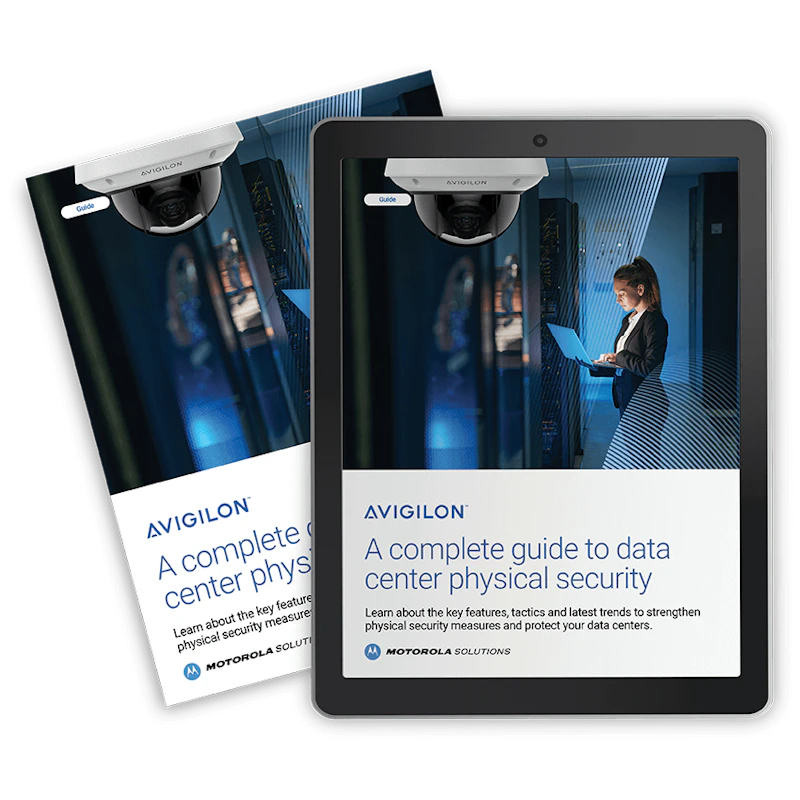
Free data center physical security guide
Get our free guide and checklist to improve your facility’s security posture and discover:
- Common threats and challenges
- Key regulatory and legal considerations
- Comprehensive security strategies
- A complete security checklist
8 key elements of data center physical security
As organizations worldwide are increasingly dependent on servers and network infrastructure, physical security has become a top priority for data center business leaders. Industry data reflects this growing focus, with the data center physical security market valued at $13.4 billion in value in 2024.
Strong physical security for data centers ensures that critical applications and information remain online and protected from evolving risks. To achieve this, businesses must implement multiple layers of defense.
Here are eight key elements of effective data center physical security:
1. Physical access control
Data centers store an organization’s most important assets, such as servers that provide the data, applications and connectivity needed for everyday operations. Given their importance, a multi-layered security strategy is essential, and physical access control often serves as the first layer of defense.
Data center access control encompasses the methods and technologies used to restrict entry to sensitive areas. Typically, this involves secured doors or gates equipped with hardware that requires users to verify their identity before entry.
Common forms of physical access control include:
- Keypads with PIN codes
- Mobile device access using one-time passwords (OTPs)
- Biometric systems such facial recognition
- Card readers or key fobs
When users interact with an access control device, the system checks stored credentials against its security database. Authorized users are granted access, while unauthorized attempts are denied.
Modern access control systems allow security teams to manage permissions remotely, grant or revoke entry and receive real-time notifications about activity in restricted areas. These systems also maintain detailed audit logs to provide a clear record of who accessed a space. This is critical for investigations following any security incidents.
2. IoT detection devices
Data center physical security standards often recommend IoT devices as an added layer of protection. These sensors continuously observe the environment and transmit alerts to security personnel when anomalies are detected, allowing faster responses to potential intrusions or equipment issues.
Common IoT intrusion detection devices in data centers include:
- Motion detection sensors to detect movement in sensitive areas such as server rooms
- Sound detection systems to identify unusual noises that may indicate tampering or forced entry
- Vibration sensors to register abnormal seismic activity, which could signal excessive foot traffic, tampering or earthquakes
- Temperature and humidity data to observe environmental conditions and maintain safe operating ranges for critical equipment
By tracking environmental changes, IoT devices not only strengthen physical security in data centers but also help prevent operational risks such as fire or water damage. This proactive measure ensures both equipment safety and business continuity.
3. Video security systems
Video security is a core component of physical security for data centers, as it provides around-the-clock oversight of critical infrastructure. Network and IP cameras are typically positioned at key access points, within server rooms and along perimeter boundaries to observe activity across the facility.
Modern video security systems often integrate with access control solutions to ensure that visual data is paired with entry records for a stronger security posture. Advanced cameras equipped with video analytics software and AI can process footage in real time and automatically flag unusual behavior or potential intrusions by sending alerts to security teams.
By using intelligent video security systems, organizations benefit from a consistent, real-time visual view of the premises. For company leaders and building administrators, these systems form an essential layer of data center physical security to improve situational awareness and enable faster responses to threats.
4. Emergency preparedness
Emergency preparedness is a critical element of physical security standards that require detailed response planning for a wide range of potential incidents. The goal is to have a clear, executable strategy so equipment and personnel can swiftly take coordinated action in emergencies.
Well-designed response plans minimize downtime and protect valuable assets to ensure the organization’s network remains resilient, even during disruptive events. Preparation typically focuses on natural disasters and infrastructure risks, including fire, flood, earthquake, severe storms and prolonged power outages.
To build an effective emergency preparedness strategy, security teams should:
- Conduct a comprehensive risk assessment to identify threats to equipment and personnel.
- Develop response plans tailored to identified risks.
- Establish redundant systems for data storage, power supply and security infrastructure.
- Train staff regularly on emergency procedures and incident response.
- Secure physical equipment, such as server racks, with safeguards like seismic pads or fire-resistant casings.
- Perform regular physical security audits to ensure plans remain current and effective.
5. Personnel training
People are often the first line of defense in maintaining physical data center security. All personnel working within a facility should be trained not only in emergency preparedness but also in how to recognize and respond to general security incidents. Well-trained staff can act quickly and deter potential intrusions or malicious activity.
Data center physical security training should include:
- How to identify potential risks and threats to data center security
- Proper use of emergency response systems and devices such as fire extinguishers and blankets
- Procedures for safely shutting down critical equipment
- Knowledge of evacuation routes and procedures
- Correct reporting protocols for escalating security risks or incidents to a supervisors
6. Power supply
In 2022, data centers consumed about 2% of the world’s total electricity, and this number continues to grow as reliance on digital infrastructure increases. A reliable power supply is a critical element of physical security for data centers. It ensures that all security layers remain functional and effective.
Data center security systems such as video security, access control and IoT detection devices all rely on continuous power to operate optimally. To maintain uninterrupted operation, data center administrators typically deploy uninterruptible power supplies (UPS) and backup generators to provide resilience during outages and protect network assets from disruption.
7. Environmental protection
Data center assets are vulnerable to external and internal environmental threats. Depending on their location, facilities may face natural disasters such as floods, fires, storms or earthquakes, all of which can damage equipment and disrupt data center operations.
Internal risks, including equipment overheating, water leaks or gas leaks, also pose significant challenges to physical security in data centers. To mitigate these risks, IoT devices such as fire detection and humidity sensors are commonly deployed to observe critical areas in real time.
These systems provide instant notifications to security teams and enable faster response to internal and external environmental changes. By combining proactive observation with rapid action, organizations can protect assets while reducing downtime.
8. Design and maintenance
The ongoing maintenance and design of a data center are essential for an effective physical security strategy. Facility administrators must collaborate closely with planners to ensure that server placement, walkways and security equipment align with physical security standards to provide optimal protection for critical assets.
Regular audits and maintenance of security systems are equally important. By reviewing access logs, testing equipment and evaluating current protocols, teams can identify vulnerabilities and adapt to evolving physical threats. A thoughtfully designed and consistently maintained security infrastructure is key to safeguarding organizational operations.
Conclusion
To help administrators build a stronger data center physical security strategy, review these essential points:
- Physical security safeguards critical assets like servers.
- Effective protection relies on layered measures, from perimeter defenses to trained personnel and advanced detection technologies.
- Strong practices help reduce risks such as theft, vandalism and natural disasters.
- Eight essential elements offer a framework for building a comprehensive strategy.
- Access control, security cameras with video analytics, IoT monitoring and trained staff work together to protect assets and detect threats.
- Regular reviews, testing and audits ensure defenses stay effective against evolving risks.
This guidance provides a foundation to enhance physical security for data centers, with the flexibility to scale and adapt strategies as organizational needs evolve.
Data center physical security FAQs
Have questions? We can help
Our video security experts can help you implement the right security system for your business.