Visitor management system benefits: is it right for your facility?


Trusted by 100,000+ organizations globally
- 6 advantages of visitor management systems
- Could visitor management benefit your organization?
- Conclusion

Free visitor management guide
Controlling access to key areas of your site is central to running safe and efficient operations. Without a secure way to verify visitor credentials and pass on important security information, organizations face significant risks, such as intrusion events and security breaches.
The benefits of visitor management are far-reaching, enabling businesses to provide swift and convenient access to guests, log entry events and automate security responses. The guide below explores these and more advantages of visitor management systems for modern sites.

Download your free 2026 guide to visitor management
- Core features and how the system works
- Key components and configurations
- Factors to consider when buying a system
- Complete checklist for implementation
6 key advantages of visitor management systems
The purpose of visitor management systems is to help professionals prevent unauthorized access events and improve guest experiences. By providing all visitors with personalized access credentials at points of entry, leaders can reliably track who is on the premises at all times.
Well-implemented systems offer a range of benefits spanning safety, security and organizational practices. Research suggests 92% of businesses using visitor management systems believe the solutions are central to creating safe work environments.
Below, we cover some of the major advantages and benefits of visitor management systems.
Improved security and threat prevention
Deterring unknown and potentially dangerous individuals from entering private facilities is one of the main reasons why visitor management is important. By providing reception staff with a way to verify identities at all entrances, teams can ensure potential risks are promptly addressed.
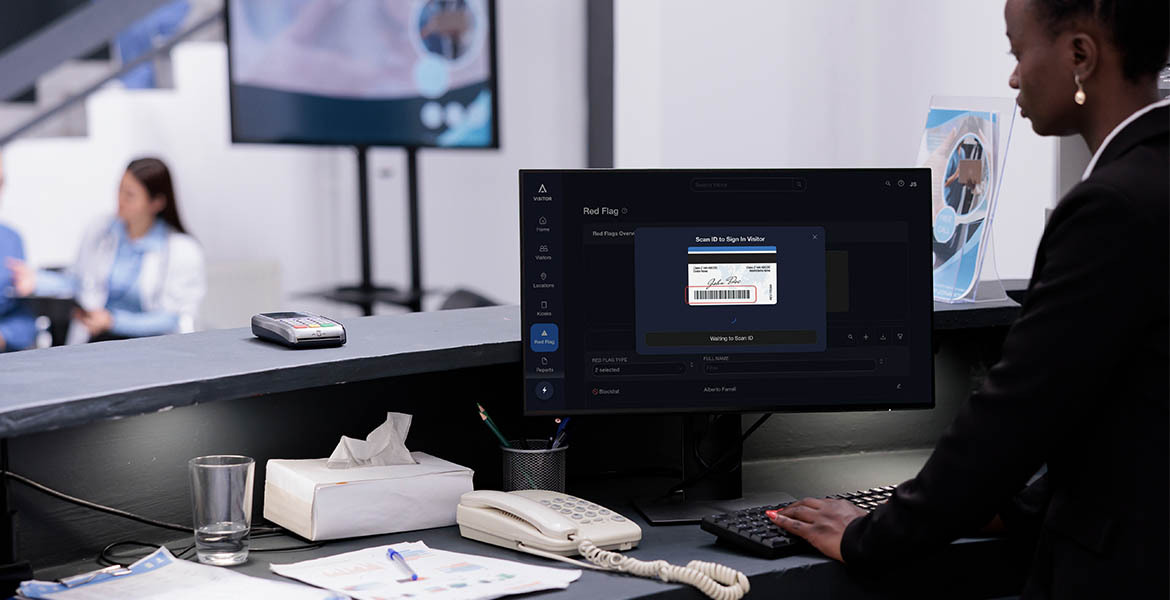
Most modern visitor systems include ID scanning technologies that desk staff can use to check visitor credentials against crime databases and watchlists. Should an ID be flagged for any reason, internal security teams and local police can be notified immediately.
Pre-screening is another common visitor management feature designed to help staff assess the purpose and validity of access requests before arrival. Guests are asked to complete an online form with fields for their credentials and the reason for their visit. This helps staff ensure only verified persons are granted property access. Pre-screening is particularly useful to visitor management for manufacturing facilities, industrial plants and other sensitive properties where unauthorized access can be especially hazardous.
Many visitor management systems also feature badge printing capabilities, enabling desk staff to provide guests with time and date-marked ID cards at points of entry. These key features combined can help to prevent unknown and dangerous individuals from entering secure sites.
Streamlined compliance and reporting
Additional visitor management benefits are enhanced compliance and reporting workflows. By helping staff automate data collection and generate accurate records of all entry events, such systems can help streamline core compliance and reporting processes.
Well-implemented systems provide employees with an intuitive, secure and reliable way to gather and organize important visitor information. Through case-specific integrations, this data can be automatically sent to relevant wider systems and departments.
Major benefits of visitor management systems leveraged for this purpose include:
- Automated audit trails: All access requests and events are automatically recorded and time- and date-stamped to help leaders conduct effective audits and investigations.
- Reliable regulatory compliance: Digital systems can be configured to meet industry-specific rules and regulations, helping ensure ongoing compliance.
- Secure document handling: Important documents, such as safety waivers and NDAs, can be signed electronically and stored securely as PDFs for better data accessibility.
- Real-time data management: Staff can access custom dashboards that display real-time activity and occupancy data, helping address security issues promptly.
Convenient access for staff and guests
Alongside safety, physical security and reporting benefits, modern visitor management systems can improve employee and guest experiences. Visitor management systems offer advantages over traditional access security processes by supporting streamlined, contactless access.
Businesses can install visitor management kiosks in lobbies and at main entrances to allow guests to handle access requests independently. Visitors can receive credentials online before their visit and then use their personal smartphones to check in at automated kiosks upon arrival.
These systems can be integrated into broader mobile access control systems, allowing both guests and employees to access relevant areas of the property using digital credentials. In a high-risk facility, additional biometric protections can help restrict entry to high-security areas through multi-factor authentication, improving site-wide security and convenience.
Systems can also be linked to amenity booking and scheduling programs to provide further visitor management benefits. Guests can book time in meeting rooms or at on-site facilities, such as gyms and spas, during pre-screening, then use the same digital credentials to gain entry.
Standardization and scalability benefits
As electronic visitor management systems can be accessed and adjusted from a centralized management platform, they can help businesses standardize access security processes across multiple locations. This helps ensure consistent and appealing guest experiences.
Rules can be set for different types of guests and applied to visitor management processes across all business locations. This means that if a guest or employee requires access to a different business-owned site, they’ll already be aware of how to gain access most efficiently.
Common visitor management system features also benefit scalability by streamlining:
- Multi-site management: Cloud-based management systems enable staff to manage requests and visitor data across multiple sites from a single, centralized dashboard.
- Equipment deployment: New sites can be added to the wider visitor management system when needed, with minimal requirements for additional hardware and software.
- Data handling: Data associated with multiple sites can be combined in a centralized platform, with business-specific security and privacy rules applied equally to all data.
- Security and compliance updates: Updates to rules and policies can be applied to systems across all locations automatically to help prevent exploits and breaches.
Enhanced data analytics capabilities
One of the major benefits of a visitor management system is its ability to automatically log and organize access records, making it instrumental in improving essential analytics processes, particularly those related to occupancy management and facility usage.
Well-implemented systems enable businesses to generate accurate logs of foot traffic through main entrances and internal areas, helping management teams to understand when certain facilities are in high demand and where resources are best utilized.
Leaders can reference occupancy data when creating and distributing physical materials, such as welcome packs and refreshments, enabling managers to ensure visitors receive the required resources during low- and high-traffic times. This helps maintain a high-quality visitor experience.
Real-time occupancy data generated by visitor management systems can also be used to produce accurate headcounts and records of who is on the premises at any given time. This feature can help support effective incident responses and evacuations during emergencies.
Seamless integration with wider systems
Many modern systems leverage cloud-based technology to support remote management workflows. Businesses can utilize this visitor management system feature to build integrations with existing security and building management software.
Workflows can be programmed so that visitor system data automatically triggers wider devices, such as entry readers, IP cameras, alarms and HVAC systems, enabling teams to improve incident response times and general guest experiences.
Popular and impactful visitor management system integrations include:
- Access systems: Visitors can be handed custom credentials that grant time-based access to select areas/assets, with existing access readers used to handle requests.
- Security cameras: CCTV systems can be programmed to automatically flag footage of access requests and suspicious events, helping teams investigate security issues.
- Alarm systems: Audible and/or silent alarms can be triggered in response to specific events, e.g., failed ID screenings or attempts to use credentials after they’ve expired.
- HVAC systems: A facility’s HVAC systems can be configured to engage in response to live occupancy data, helping leaders minimize energy consumption.

Smarter, safer visitor management
- Enhanced security and simplified check-in
- Real-time visitor activity insights
- 24/7 remote visitor management
- Cloud-based, scalable and flexible
Could a visitor management system benefit your organization?
The advantages of a visitor management system span businesses of all sizes, with modern systems able to be adjusted to meet the unique needs of various organizations.
Whether you’re running a small office space, a high-risk institution like a school or hospital or in charge of guest management at an apartment complex, upgrading from an outdated and inefficient paper-based management process can help to improve security and convenience.
If your organization experiences one or more of the challenges or inefficiencies below, an electronic visitor management system could benefit your staff and guests.
- Outdated sign-in process: Pen and paper-based sign-in processes are difficult to organize and can be easily exploited by malicious actors. In comparison, electronic systems offer benefits like automated logs and alerts.
- Non-standardized procedures: Running different visitor check-in processes across multiple sites can be confusing and frustrating for clients and guests. By upgrading to a smart visitor management system, processes can be standardized across all sites.
- Rising occupancy rates: Manual check-in processes can quickly become inefficient and unsafe as visitor volumes rise. By transitioning to a digital system, staff can automate sign-in processes, reducing wait times and improving security.
- Suboptimal visitor experience: Inefficient or confusing sign-in processes create a poor first impression for visitors and guests, potentially leading to negative reviews and reputational harm. Digital systems can help to combat this issue.
- Complex security needs: Operators of organizations with complex security needs, such as schools, hospitals, factories and manufacturing facilities, require visitor management solutions designed to screen IDs and restrict access to specific areas.
- Inefficient data management: Manual sign-in processes leave businesses with limited visibility into how many people are on-site at any given time. One of the main benefits of a digital system is the ability to review occupancy data as required.
Improve security and convenience with a smart visitor management system
Most business owners and facility managers understand the importance of a visitor management strategy. Yet, many rely on outdated, manual processes to track access events. By upgrading to a smart visitor management solution, leaders can reliably control access across complex sites and multiple facilities, improving security and ensuring a great guest experience.‘
Have questions? We can help
Our video security experts can help you implement the right security system for your business.