Vehicle access control: how to choose the right solution for you


Trusted by 100,000+ organizations globally
Incidents involving unauthorized vehicles, like organized retail crime, cargo theft and vehicle ramming attacks, can cause serious harm to people and property and cost significant sums to address. By choosing to install and operate vehicle access control systems, owners and managers of private facilities can help to improve security outcomes and visitor experiences.
What is vehicle access control?
Vehicle access control is the practice of restricting and managing vehicular access to private properties and controlled sites. They can include physical barriers and technological systems designed to prevent vehicles from entering secure areas.
How do vehicle access control systems work?
Vehicle access control systems work by using physical barriers, gates and credential readers to prevent vehicles from freely entering controlled areas. Entry roads are locked behind gates and barriers that will only open if valid credentials are presented to connected access readers.
The types of infrastructure and technologies that property owners use to restrict vehicular access can play an important role in the system’s efficacy. Lower-risk sites may be appropriately secured using retractable bollards and manned gates, while higher-risk facilities often require more advanced measures that use special cameras and credential readers to restrict access.

Quickly open gates with license plate access
- Accurate license plate reads
- Create approved and banned vehicle lists
- Help prevent unauthorized vehicle access
- Catalogue events for easy search
The importance of vehicle access management
Vehicle access management is an important security practice for all organizations that allow vehicles to enter controlled areas. Unknown vehicles can carry items and persons that could cause harm to people and property, so it’s important to scrutinize all vehicular access events.
Sites without vehicle access control systems in place can be vulnerable to threats such as:
- Theft and vandalism: Criminals intending to steal assets and vandalize property can use unassuming vehicles to gain access to and flee from private facilities undetected.
- Kidnapping: Facilities that house vulnerable persons, like schools and hospitals, face elevated kidnapping risks, with 65% of attempted child abductions involving vehicles.
- Sabotage: Undetected vehicles can provide saboteurs discreet entry to secure sites.
- Cyber-attacks: Connected vehicles can use Vehicle-to-Everything technologies to steal confidential data and access digital systems if parked near secure facilities.
- Physical attacks: Vehicle-ramming attacks and attacks involving vehicle-borne explosives can cause serious property damage and injuries to workers and guests.
Common use cases of vehicle access systems
All properties and environments accessible by vehicles stand to benefit from vehicle access control systems. To understand exactly how these types of technologies can help to improve physical security across different industries, here are some examples of common use cases.
Apartment complexes
Vehicle access control gates stop unknown vehicles from entering access roads and parking lots while granting convenient entry to tenants, couriers and guests.
By physically preventing unauthorized vehicles from accessing apartment complexes, property managers can help to combat common threats such as mail theft, loitering, vandalism, vehicle break-ins and burglaries.
Gated communities
Vehicle gate entry systems that only grant access to residents with pre-issued credentials are commonly used in gated communities.
Vehicle access systems help to protect homeowners against threats like tailgating, vandalism and theft, as well as enable security teams to focus on complex issues, as the system can be automatically or remotely operated.
Parking garages and public lots
Helping secure parking garages and public lots is crucial to client satisfaction. Intrusion, vandalism and theft are common security threats that these facilities face. With vehicle access systems, organizations can combat these issues.
The system helps prevent unauthorized vehicles from accessing the garage or lot, while providing seamless access to those authorized to enter. Furthermore, organizations can gather valuable information, such as occupancy levels, to support decision-making and optimize parking operations.
Schools and healthcare facilities
Vehicle access management is critically important in learning and healthcare environments, as facility operators have a duty of care to vulnerable persons.
By ensuring all vehicles are identified and logged on arrival, security teams and caregivers can help to address serious threats, such as kidnapping, domestic abuse and targeted attacks, against high-risk facilities.
Corporate offices
Controlled vehicle access systems can help to streamline traffic management across busy corporate offices by automating complex access requests.
Appropriate access credentials can be issued to different types of vehicles, including temporary passes for contractors, visitors and delivery drivers, to help minimize congestion and ensure facilities remain well-secured.
Events and venues
Organizers can significantly enhance management for events and venues by installing vehicle access control systems. These solutions streamline entry by ensuring that only authorized personnel, vendors and VIP guests gain entry, reducing manual checkpoint delays and preventing unauthorized vehicle access to restricted areas.
Additionally, these systems provide real-time data and analytics, allowing venue managers to observe traffic flow and occupancy levels effectively. By integrating these solutions, events can maintain a high standard of venue security while ensuring a seamless arrival experience for all attendees.
Hospitality and leisure facilities
Vehicle access control barriers can help to streamline traffic management and improve guest experiences across hospitality and leisure facilities.
Systems can be used to automatically control vehicular access at all hours, ensure only registered, paying customers have access to controlled areas of the site and help to minimize security threats like theft and vandalism.
Construction sites
Vehicle access control systems are an integral element of construction site security systems, as they help to ensure smooth access for heavy machines while preventing potential thieves from accessing sites.
Data suggests as much as $1 billion worth of equipment is stolen from U.S. construction sites a year, with 85% of construction companies having experienced theft.
Government and military facilities
Vehicular access to government and military facilities is legally mandated to be controlled to protect people, property and sensitive information against targeted attacks.
Vehicle access control systems used to secure high-risk government sites will typically leverage advanced biometric credentials and wider facility security system integrations to help combat complex threats.
Types of vehicle access systems
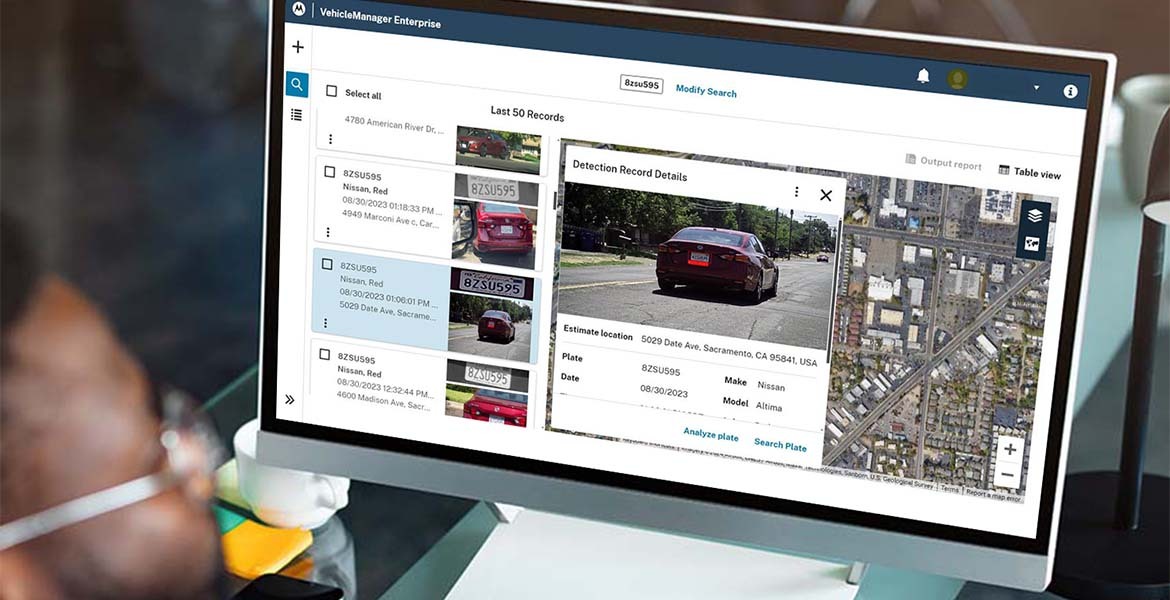
While all vehicle access systems share similar components, such as barriers, credential readers and management software, operators can choose between several types of systems that provide unique benefits and help to meet case-specific management and security needs.
Keypad vehicle gate entry systems
When using a keypad entry system, authorized persons must input a predefined code into a gate-mounted keypad to request access to secure areas. If the code is accepted, the gate will automatically open and the system will log the event for auditing purposes.
Pros:
- Cost-effective: Keypad-based access systems are relatively inexpensive as they require no advanced components or physical credentials to work as intended.
- Easy-to-use: Authorized users are only required to remember a single code to enter secure areas, helping to avoid issues with lost, forgotten or misplaced credentials.
Cons:
- Low-security: Codes can be easily shared with unauthorized persons or brute-forced by criminals.
- Management constraints: As one code is shared among all users, operators cannot review detailed records of individual vehicular access events.
- Wear and tear: Wear on the keypad can enable intruders to guess live credentials.
Keycard and fob-based systems
In this type of vehicle access control system, proximity-based key cards and fobs containing user-specific digital credentials are used to control entry to secure areas. A user holds their card up to a reader to request access, and the event is automatically recorded by the system.
Pros:
- Contactless: Users can request property access from the safety of their vehicles.
- Data-rich: Each user is issued a unique card containing personalized credentials, enabling operators to see who has requested access and at what times.
- Configurable: Operators can freely adjust and revoke permissions associated with individual users using vehicle access control software.
Cons:
- Credential loss: Physical cards and fobs are easily lost and misplaced.
- Cloning concerns: Some proximity cards and fobs can be copied by criminals using handheld cloning devices.
- Operating costs: Replacement costs for lost or stolen cards and fobs can reach as high as $100 per unit.
App-based systems
App-based or mobile credential systems enable authorized persons to use their smartphones to request site access. Unique credentials are sent to users’ smartphones by email or via a proprietary app to support swift, contactless vehicle access management.
Pros:
- Convenient: Users don’t need to carry extra physical credentials and can be granted touchless access to secure areas.
- Secure: Credentials stored on the user’s smartphone are secured behind in-device password and biometric protections.
- Time-based: Operators can issue temporary credentials to contractors, couriers and guests that automatically deactivate at a predetermined time.
Cons:
- Cyber risks: Proprietary apps may be vulnerable to cyberattacks that could enable criminals to steal credentials.
- Connectivity: Users’ devices must be charged and connected to the internet to interact with vehicular access readers.
- User adoption: Not all communities will have access to or be able to comfortably use smart devices.
License Plate Recognition (LPR) systems
LPR systems use special cameras that can scan license plate details to control vehicular access to secure facilities. If a vehicle’s license plate details match a set stored in a connected database, the barriers will open and the access event will be recorded.
Pros:
- User-friendly: Users are not required to find and present credentials on arrival.
- Efficient: LPR cameras can scan plates and process requests on approach, allowing authorized vehicles to move through gates without slowing to a halt.
- Automated denylisting: LPR systems can be linked to site-specific security and crime databases to automatically denylist problematic vehicles.
Cons:
- Upfront costs: LPR cameras and associated vehicle access control software can be costly to purchase and install.
- Configuration: LPR cameras must be positioned in well-lit areas and angled towards incoming vehicles to consistently capture license plate data.
- Data security: Operators must maintain compliance with data privacy and retention regulations when operating video capture systems.
Biometric vehicle entry systems
These entry systems use biometric information such as fingerprint, iris and facial recognition scans to grant or deny property access. On arrival, users present biometric data to a gate-mounted reader and will be granted entry if their information matches a set on file.
Pros:
- High-security: False acceptance rates for biometric credentials can be as low as 1 in 1 million.
- Accountability: As biometric data cannot be easily fabricated or used fraudulently, access events can be tied to specific individuals with near certainty.
- Convenient: Users do not need to carry around physical token-based credentials.
Cons:
- Upfront costs: Biometric access readers and management software can be costly to purchase and install.
- Maintenance: Scanners and cameras must be regularly cleaned and maintained to function effectively.
- Data security: Operators must maintain compliance with data privacy and retention regulations when handling Personally Identifiable Information (PII).

Download your free 2026 guide to access control
- Explore access control and how it works
- Key access control components
- Considerations when choosing a solution
- Complete checklist for implementation
How to choose the right vehicle access control system
Property owners and operators must consider the unique threat landscape of their facilities and the needs of authorized users before identifying appropriate solutions.
Important factors to consider when choosing a vehicle access control system include:
- Installation costs: Credential type, power and networking requirements can have a significant impact on the cost of installing a new vehicle access system.
- Maintenance: Maintenance requirements for different types of readers and gates can vary significantly, as can update requirements for vehicle access control software.
- Integration capabilities: Solutions that can be integrated into wider video security, access control and sensor systems can provide wider security benefits via automation.
- Traffic volume: Systems that require users to stop to present credentials may not be appropriate in high-traffic environments.
- User requirements: Not all user bases will have access to smartphones or be able to comfortably use token-based credentials like key cards.
- Scalability: Consider how easy it may be to add new access points and readers to proposed installations when comparing vehicle gate access control systems.
Secure your facility with a vehicle access control system
Vehicle access systems enable site operators across wide-ranging environments to prevent unknown vehicles from entering controlled areas. By choosing an appropriate credential type and considering unique user requirements, property owners can develop convenient, secure and intuitive vehicle access systems optimized to help minimize site-specific security threats.
FAQs
Have questions? We can help
Our video security experts can help you implement the right security system for your business.