Seven essential tips for designing an efficient hospital building

Trusted by 100,000+ organizations globally
Successful hospital building designs prioritize safety, security and accessibility to help ensure facilities are easy to manage. Hospital architecture must be carefully designed to ensure sites are welcoming, hygienic, scalable and well-secured.
This comprehensive guide offers actionable tips and strategies for modern hospital building design. It will assist facility owners, operators and administrators in constructing new healthcare facilities and upgrading existing ones to meet the needs of patients and staff.
The importance of hospital building design
Hospital building designs have a great impact on the level of care provided to patients. When hospital layouts are intelligently designed to support streamlined facility access, efficient cleaning and simple scalability, staff are empowered to focus more intently on patient needs.
When building or redeveloping a hospital, stakeholders can be influenced by the following goals and key factors.
Staff and patient safety
Intelligent modern hospital design enhances patient and staff safety by prioritizing features that help prevent accidents and enhance incident response times. This enables healthcare staff to place full focus on caregiving.
During the hospital design process, facility owners and operators will consider how physical infrastructure can be adjusted to ensure safe and efficient access to high-risk spaces, such as wards and emergency rooms, while reliably deterring unauthorized individuals from entering secure areas.
Movement and accessibility
Streamlining movement through complex healthcare facilities is a key objective of effective hospital building design. Ideal hospital layouts are simple and logical, utilizing architectural elements to help people locate key areas with little need for written instructions or signs.
Close attention is paid to lighting and identifiable landmarks to help visitors navigate complex facilities. Medical building designs also prioritize wide corridors and open spaces to help streamline traffic flow through busy areas at all times of day.
Energy needs and efficiency
Developing energy-efficient hospital architecture helps administrators improve operations by reducing running costs, enhancing resilience during power outages and maintaining safe and comfortable environments for patients through smart HVAC installations.
A well-designed hospital building will be powered using renewable energy sources to help ensure systems remain operational during blackouts and power outages. Smart sensors linked to HVAC and lighting systems will help control power usage in relation to occupancy.
Sanitation and cleanliness
Efforts to reduce the spread of illness and improve the efficiency of day-to-day maintenance and cleaning are key goals of effective healthcare building design. Materials and layouts that are easy to clean and support continuous ventilation are prioritized when building a hospital.
Infection control efforts are also a key component of smart hospital building design. Facility owners and operators will optimize designs to separate public and patient spaces, minimizing the presence of high-touch surfaces without affecting site-wide accessibility.
Flexibility and future growth
The healthcare industry is constantly evolving, with new technologies and techniques introduced into workflows to enhance patient care and protect staff against novel risks. Effective hospital designs utilize features that can be easily adjusted and scaled as needed.
Hospital building design teams may conduct a security assessment to identify how systems can be upgraded, rooms may be repurposed and sites may be expanded to meet new demands. Aspects such as modular spaces and cloud-based technologies help teams to adjust key operations as needs change.
Seven essential elements of a successful hospital building design
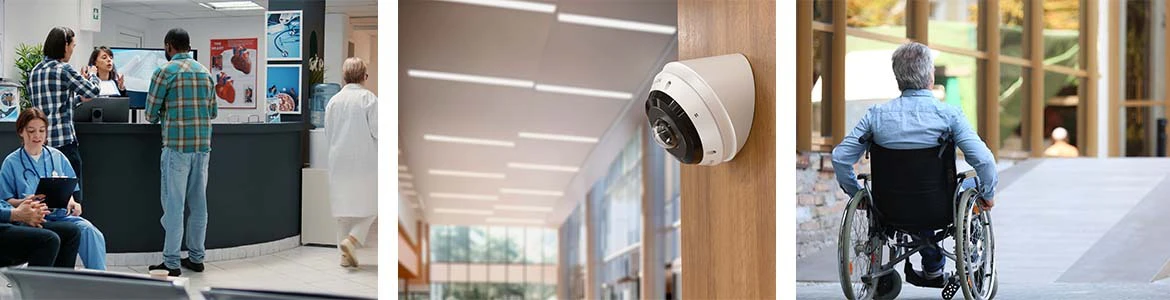
Providing patients and staff a safe, secure and comfortable environment is the key goal of modern hospital design. However, with the average U.S. hospital seeing 34 million stays and around 155 million emergency department visits per year, achieving this can be challenging.
A safe and effective hospital building will be both easy to navigate and secure, with care taken to ensure critical spaces are hygienic, comfortable and can accommodate diverse needs.
Here’s how to design a hospital building by focusing on seven essential elements.
1. Practical and accessible hospital layouts
Ensuring the basic layout and architectural structure of a facility is practical and accessible is the foundation of effective hospital building design. The site should be configured to support efficient access to critical spaces while reducing bottlenecks and unnecessary traffic.
Designing a hospital layout around a central hub helps to safely separate public and patient areas. This hub also serves as a central point for hospital visitor management, allowing patients and guests to easily check in and request the services they need. Staff can then accompany them to relevant internal areas swiftly and safely.
From this central hub, wide corridors enable occupants to access key departments efficiently. Intelligent healthcare building designs will also include nonpublic transport systems and entryways built to provide a reliable flow of resources to critical areas.
Design features that help visitors of all backgrounds locate key areas easily are also important.
Hospital building design teams should use the following techniques to improve accessibility:
- Color-coding: Assigning a distinct color to design elements in different departments helps all visitors, particularly those who don’t speak English, locate critical areas.
- Landmarks: Hospital design teams use easily recognizable landmarks, such as paintings, sculptures and water features, to help visitors find their bearings in confusing areas.
- Naming conventions: Wings that follow naming conventions, e.g., Oak Wing, Willow Wing, etc., are easier to differentiate than traditional numbered or alphabetized wings.
2. Modern safety and security technology
When building a hospital, design teams must ensure plans account for smart solutions capable of addressing complex healthcare security challenges.
Professionals in the healthcare industry face significant threats that can impact their ability to provide necessary care if left unaddressed, making intelligent security technologies a top priority.
- Healthcare workers face 5x more workplace violence than staff in any other industry.
- Almost 70% of healthcare workers are actively concerned about patient violence.
- 40% of surveyed nurses believe levels of patient violence have risen in recent years..
Secure devices, including cameras, access control systems, sensors and alarms, can be linked as part of an integrated security system, enabling data from one device to inform the operation of another. With precautions in place to protect these technologies and prevent other sensitive data breaches, a successful hospital building design will leverage its smart security system to improve situational awareness, expedite response times and automatically address common threats.
Hospital design and construction teams must ensure provisions are made for the following:
- Security cameras: Appropriate types of security cameras must be positioned to provide clear 24/7 coverage of key areas, including reception areas, wards and drug rooms.
- AI video analytics: Software tools enable cameras to automatically detect threats, such as people entering restricted areas and intruders brandishing weapons.
- Access control systems: Hospital designs must include provisions for access control systems that restrict entry to high-risk areas behind traceable credentials.
- Panic buttons: Stationary and wearable panic buttons enable workers to discreetly activate security systems and alert authorities in response to threatening behavior.
- Lockdown systems: Hospital building design teams must ensure plans allow lockdown systems that can help secure critical areas in response to unfolding threats.

Get your free healthcare security checklist
What’s inside:
- Latest healthcare trends and security strategies
- How to audit your facility’s security posture
- Top healthcare security solutions
- A comprehensive security checklist
3. Hygiene and infection control
The COVID-19 pandemic helped those outside the healthcare industry understand the vital role of effective hygiene and infection control measures. But, to healthcare professionals and hospital building design teams, the importance of these elements has long been recognized.
Professionals involved in hospital architecture design and planning adhere to strict rules and best practices to limit the spread of illness. For example, high-risk areas such as ICU rooms and maternity wards should be physically isolated from high-traffic, publicly accessible locations.
Healthcare design and construction teams often utilize non-porous, seamless materials such as vinyl sheets and resin-coated floors to make cleaning and sanitizing critical areas more efficient and effective. Additionally, filters in ventilation systems help combat airborne contamination.
Hospital building designs may also leverage smart technologies to improve infection control:
- Air quality sensors: Hospital air quality monitors installed around the property can help warn operators of air quality, heat and humidity issues that could contribute to the spread of illness.
- Touchless access systems: High-risk areas can be secured behind touchless access control systems that use mobile or biometric credentials to reduce contact with high-touch surfaces.
4. Modular and multi-purpose infrastructure
Alongside improving safety and security, hospital design architecture should enable workers to adjust infrastructure to meet evolving demands. During emergencies, for example, rooms often need to be safely and swiftly repurposed to accommodate greater volumes of patients.
Modular, multi-functional rooms with adjustable walls enable staff to quickly transform areas to address new needs. Areas can be opened up to accommodate more patients and reduce crowding in hallways, or made smaller to provide vulnerable patients greater privacy.
Hospital building designs that allow for modular and multi-purpose rooms also help operators navigate future growth more efficiently. Timelines for hospital remodels can be noticeably reduced by having custom rooms delivered prefabricated and ready to install.
5. Sustainable and reliable energy systems
When designing a hospital building, facility owners and operators must consider how power will be continuously routed to key areas, particularly during emergencies and power outages. Plans should be made to build self-reliant power systems that leverage renewable energy sources.
Key elements of an efficient, sustainable and self-reliant hospital power system include:
- Renewable energy sources: Hospital building designs should include provisions for installing solar panels, wind turbines and geothermal energy collection systems on-site.
- Battery storage systems: Excess energy collected from renewable sources can be stored in on-site battery storage systems to provide additional power when required.
- Backup generators: Critical systems can be powered independently during power outages if specialized backup generators are factored into hospital building designs.
Modern hospital designs also feature energy-saving features to reduce waste and lower operating costs. Smart building management systems informed by environmental sensors positioned throughout the property can be programmed to engage only when necessary.
Heat, humidity and occupancy sensors can help limit energy consumption by only activating HVAC and lighting systems when custom thresholds are surpassed. Research suggests this style of automated building management solution can cut energy consumption by up to 30%.
6. Comforting aesthetics and calming artwork
One element of successful hospital building design that’s easily overlooked is the presence of comforting aesthetic features that help to alleviate anxiety among patients. Design choices, such as paint colors and artwork, help people feel calmer and more relaxed in specific areas.
Color, lighting and furnishings can be used uniquely across different spaces to address patient needs. Examples to consider in hospital designs are included below:
- Pediatric wards: Bright colors, engaging murals and sensory hospital design features, such as fish tanks, can help children feel less intimidated by their surroundings.
- Behavioral units: Soft, muted colors and non-complex artwork can help promote a calming and therapeutic environment for people experiencing psychological distress.
- Recovery rooms: Warm colors and images of natural landscapes can create a positive and inspiring environment for patients recovering from stressful procedures.
Across publicly accessible areas of the site, hospital building designs should focus on simple aesthetics and bright tones to promote feelings of cleanliness and safety. In waiting rooms and wards, studies have linked cool, light colors to improved quality of life and faster recovery times.
7. Practical amenities and welcoming public spaces
Effective hospital building designs include features and amenities that enhance the quality of life for visitors and patients. Modern, well-maintained amenities help foster a sense of normalcy among visitors who might find visiting long-term patients stressful and upsetting.
Convenience stores, restaurants and cafes ensure guests have accessible ways to eat and spend necessary time away from crowded waiting areas during longer visits. Additionally, technological amenities, such as public Wi-Fi and TVs, help keep guests entertained while waiting.
Where possible, healthcare building designs should also include outdoor spaces and inviting public areas furnished with plants and greenery. Outdoor and indoor green spaces offer respite from harsh medical environments and have been shown to improve well-being.
Further ideas for impactful amenities to factor into hospital building designs include:
- Family resource centers: Spaces for long-term visitors to sleep, relax and access concierge services away from crowded waiting areas can provide welcomed comfort.
- Sensory rooms: Including sensory rooms in hospital building designs can provide a safe, quiet and engaging space for patients to recalibrate and relax.
- Retail spaces: Retail spaces, including bookstores, gift shops and spas, can help long-term visitors entertain themselves, while also generating extra revenue for the hospital.
- Meditation rooms: Building meditation rooms provides patients and visitors with a dedicated space to escape loud, overwhelming waiting areas.
- Multi-faith rooms: On-site chapels and multi-faith rooms provide spaces for individuals who practice religion to connect with their faith and seek comfort during stressful hospital stays.
Hospital design checklist for a safe and efficient environment
Successful hospital building design balances multiple key elements, such as security, scalability and accessibility, to facilitate a safe and practical environment for all.
Modern hospital buildings should have practical layouts, feature advanced physical security systems, be easy to clean, adjustable and powered by self-reliant, energy-efficient systems.
To aid hospital design teams in planning, building and remodeling healthcare facilities, below is an actionable checklist of key points from this guide to support effective hospital designs:
- Ensure the hospital layout is practical, accessible and built around a central hub.
- Utilize visual clues like color-coding and landmarks to differentiate key departments.
- Use naming conventions over numbers or letters to differentiate different wings.
- Build integrated healthcare security systems to help address common threats.
- Ensure smart security cameras with AI video analytics observe key areas.
- Ensure all high-risk spaces are secured behind managed access control systems.
- Coat walls and floors with non-porous, easy-to-clean finishing materials.
- Consider touchless access systems to help reduce contact with high-touch surfaces.
- Build modular, adjustable rooms to improve adaptability and future scalability.
- Build self-reliant, renewable energy solutions to keep critical systems running 24/7.
- Pursue warm, comforting aesthetics in waiting and treatment rooms to calm patients.
- Provide amenities for visitors, such as cafes, shops and resource centers.
FAQs
Have questions? We can help
Our video security experts can help you implement the right security system for your business.