Complete guide to airport access control systems

Trusted by 100,000+ organizations globally
Visits to airports are on the rise as more people take to the skies to travel for work or pleasure. However, several recent high-profile airport security incidents have highlighted the growing concern that current security measures are not keeping pace with the increasing number of air travelers.
Access control in airports is a crucial security measure that enables the management and restriction of access to sensitive areas within the facility. They are a scalable, flexible first line of defense against intruders that may seek to disrupt operations or cause public disorder.
Those threats include external concerns posed by visiting passengers and parties outside the airport, such as unauthorized access to restricted areas. Internal threats from airport employees also pose security issues, as they can abuse their security privileges for personal gain.
Installing an access control system enables the airport security team to establish permissions and oversee who can enter and exit specific areas, thereby helping to mitigate threats to the facility and its occupants.
This guide will examine the growing importance of airport access control as a security measure, offering best practices for implementing an effective system.

Simplified, secure access for your airport
- Entry methods like key fobs, cards and mobile
- Easy-to-use cloud software
- Remote management features
- Unlimited integration capabilities
Why an airport access control system is important
Airports are among the busiest transport hubs in the world, with millions of passengers passing through security checkpoints daily in the United States alone. With such high traffic, more robust security measures are necessary to help ensure the safety of travelers and staff, as well as to improve operations in this multifaceted environment.
Access control systems in airports are a core driver of an overall security strategy. Here’s why it’s important:
- Prevent unauthorized access: Airports are complex facilities with many sensitive areas, from aircraft maintenance hangars to passenger baggage processing. Access control systems prevent unauthorized individuals from entering restricted zones where they could disrupt operations.
- Enhances safety and security: Airport access control systems help improve the safety and security of employees and passengers, guarding the critical infrastructure, such as control towers and runways, from potential security threats.
- Staff management: Access control in airports can help oversee staff operations, allowing permissions only to those granted to enter specific areas. Systems also have activity logs to keep records of who enters and exits secured zones.
- Enables emergency response: Access control can help coordinate and manage the movement of passengers and personnel in the event of an emergency. Officers can use these systems to respond to incidents more quickly and help bring the situation under control.
- Regulatory compliance: Airports are generally highly regulated facilities that must comply with global industry security standards. Access control systems are an integral part of airport security measures for regulatory compliance.
- Operational efficiency: Access control systems for airports can also help streamline operations by reducing bottlenecks, defining security permissions and optimizing passenger traffic.
- Incident reviews: Officers and security personnel can utilize records from an airport access control system to review and analyze incidents, thereby continually improving airport security.

Download your free guide to access control
What’s inside:
- Access control fundamentals & how it works
- Key components and configurations
- How to choose an access control solution
- Complete implementation checklist
Key airport access control system components
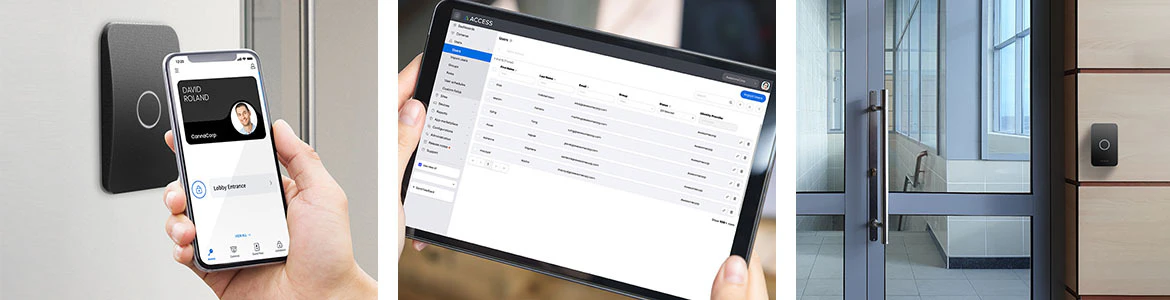
Access control systems can vary depending on the level of security required and the optimal method of entry and exit within the airport facilities. The system’s components are what contribute to protecting restricted areas and optimizing passenger traffic flow, designed to mitigate the primary threats to airport security.
Here are the key components of an airport access control system:
Credentials
Credentials are the identification data of a person that indicates their permissions to access restricted areas or perform tasks in the context of airport security. They are typically devices or gadgets that serve as proof of a person’s authorization to access secure areas.
Airports will primarily use credentials to define employees’ access levels and roles within the facility’s operation, such as access to aircraft maintenance facilities or security control rooms.
They will also use passenger credentials to define their permissions for entering certain areas, such as airplane gates or visitor lounges.
The different ways of proving access credentials include:
- Proximity card: Physical cards that you touch on a proximity reader for security access.
- Smartphones: Mobile security recognition that uses either Bluetooth or radio frequency identification (RFID) technology to identify a person and check permissions.
- Facial recognition: Facial recognition cameras compare a person’s face against a database to verify that the correct individual has access to a specific area.
- Magnetic stripe cards: Physical cards swiped on a key card reader with credentials stored on a magnetic strip.
- PIN: The access code given to authorized personnel is entered on a keypad entry system.
- Fobs: A small device with RFID access technology that is touched against security hardware to grant entry.
- Fingerprints: Verify a person’s identity by scanning their fingerprints.
Readers
Access control readers are the hardware that check and process credentials against a device, action or sensor. It sends a person’s data to a control panel to verify access, allowing entry or exit to an area if they have the necessary permissions.
Here are the most common readers found in airports:
- Card reader: Hardware that uses RFID technology or magnetic readers to check physical cards and read the credential data of a person.
- Physical scanner: Devices that scan for certain features of a person to verify a person’s identity and check for credentials. Scanners often check for facial features or fingerprints.
- Keypads: Numerical or alphabetical pads where users enter PIN codes or passwords to gain entry to an area.
- Receiver: Devices that receive wireless signals from other devices that check credentials when detected.
Management software
Access control management software provides a platform for security teams to oversee and define who has permission to access which areas of an airport. The responsible parties use the software to set security clearance, review activity logs and optimize access processes.
Many access control management platforms also integrate with other security technologies, such as cameras and detection sensors, to build a more comprehensive and streamlined airport security system.
Control panel
The control panel serves as the central hub of an airport access control system, where readers communicate with a server to verify credentials against a database. If the person has permission to enter the area, the control panel will signal for the barrier to open.
Physical barriers
Physical barriers are the assets that protect restricted areas, fitted with locks or locking systems that only open when an authorized person is permitted to pass. Strong, resistant materials often make up the composition of the barriers that include the readers required to signal entry into a secured zone.
Physical barriers in airport access control systems include:
- Doors: Strong structures that control entry and exit to specific areas in airports, protecting restricted zones from intruders or disruptions.
- Gates: Barriers used to control airport traffic flow and prevent unauthorized access to boarding areas and departure zones.
- Turnstiles: A more economical barrier designed to be a security checkpoint for passengers requiring permission to pass into other areas.
- Fences: Long barriers erected around sensitive areas of an airport, such as runways and aircraft maintenance hangars.
Best practices for access control in airports
Airport security is a consistently growing and evolving concern, prompting administrators and managers to seek solutions that mitigate potential threats. Access control plays a substantial role in the facility’s overall security strategy.
Here are six best practices for access control in airports:
1. Implement a layered security approach
A layered security approach utilizes multiple security hardware and software components to create a comprehensive strategy that protects premises and deters potential threats.
Airports can significantly benefit from a range of security technologies, as facilities are often large and complex, requiring multiple layers of security to enhance safety.
Airport access control systems are a significant part of the layered security approach, pairing with other hardware and software, including:
- Video security cameras
- Detection devices with Internet of Things (IoT) sensors
- Visitor management systems
- AI video analytics
Combining these elements with access control can help mitigate threats, improve emergency response times and increase productivity in airports.
2. Conduct regular security audits
Conducting security risk assessments and audits at access control points can help identify areas for improvement in security.
Regular inspections enable security personnel to understand how traffic flows through pathways, identifying potential risks and planning for possible incidents.
3. Integrate access control with security platforms
Integrating access control systems with existing security platforms can provide a more unified security approach, improve airport workflows and streamline emergency response planning.
Examples include integrating access control with visitor management systems, security analytics platforms and activity logs to gain a more thorough, real-time understanding of the airport’s current security state.
4. Train employees
Training employees in airport access control not only helps them understand how systems work and the level of clearance required for each area, but also improves operational efficiency.
Staff can gauge where their credentials will grant access and which areas are restricted, allowing the streamlining of tasks and better direction of passenger traffic.
5. Define access control as part of an emergency response plan
An airport access control system can play a vital role in responding to incidents that might occur. Security teams should define how systems will mitigate threats in their plans, as well as how they’ll operate in an emergency scenario.
Examples of access control for incident response plans include planning for lockdowns or prioritizing access for emergency personnel.
6. Ensure correct security permissions
Ensuring the correct security permissions among airport employees is becoming increasingly important. Over 30% of organizations are expected to experience security breaches of critical infrastructure this year, including the transport industry, underscoring the need to verify that all personnel have the necessary levels of clearance.
Regularly auditing permissions among employees can help ensure that a person doesn’t have more access to airport facilities than they should, thereby reducing the risk of both internal and external threats.

Download your free airport security checklist
Airport security is complex, and our free airport security checklist is here to help. Our guide will help you identify top airport threats, plus the most effective tools and methods to protect your site.
Airport access control systems as a frontline security measure
Airport access control serves as a primary security measure not only to help protect the facility but also to maintain operational efficiency. They help minimize potential threats while allowing employees to optimize passenger traffic flows and work processes.
The above practices can help your airport’s security team contribute to a more robust airport security infrastructure that scales with demand, helping maintain the safest possible environment for both passengers and employees.
FAQs
Have questions? We can help
Our video security experts can help you implement the right security system for your business.