Complete guide to AI workplace safety

Trusted by 100,000+ organizations globally
Workplace safety has always been a top priority for businesses, regardless of industry. From construction sites and manufacturing plants to offices and warehouses, organizations must protect employees from accidents and potential threats. Traditionally, safety management relied on dedicated managers, compliance officers and manual inspections. However, these methods are becoming insufficient to mitigate security risks in the modern, rapidly evolving environment.
Artificial intelligence (AI) is transforming workplace security by processing vast amounts of data in real time and identifying anomalies, as well as recognizing patterns that humans might overlook. Companies investing in AI safety solutions are seeing benefits such as quicker response times, proactive risk management, fewer accidents and improved compliance.
This guide explores the benefits of AI in workplace safety, showcases real-world applications and considers future possibilities.
Benefits of AI-powered workplace safety
By moving beyond traditional methods, AI workplace safety technology gives organizations powerful advantages. It enhances visibility and efficiency, shifts protection from reactive to proactive and helps reduce accidents while strengthening overall resilience.
Here are some of the most impactful benefits of AI in workplace safety:
- Faster response times: This technology improves incident response times significantly. They instantly detect events like falls, fires or hazardous spills and immediately alert supervisors or emergency responders. This real-time identification ensures quicker action and better outcomes.
- Efficient real-time monitoring: Unlike manual checks, AI in safety systems runs continuously. AI-powered smart cameras and sensors track workplace conditions around the clock and detect unsafe behavior or equipment problems before issues escalate.
- Improved situational awareness: AI-driven cloud-based security cameras provide supervisors with comprehensive visibility throughout their facilities. This technology offers insights that help prevent oversights and enhance accountability, from observing hazardous areas to verifying correct machine operation.
- Reducing human error: AI technology reduces the potential for accidents caused by fatigue or poor judgment. It provides consistent, objective observation and recommendations while automating manual safety tasks.
- Predictive analytics for risk prevention: AI workplace safety goes beyond simply reacting to incidents. It uses historical data to predict potential equipment failures or high-risk accident areas. This enables businesses to implement proactive preventive measures.
- Better compliance with regulations: These business security systems streamline health and safety compliance by tracking incidents, logging PPE usage and automating audit report generation.
- Enhanced PPE detection: AI workplace safety tools leverage computer vision to immediately detect if employees are wearing necessary protective gear, such as helmets, gloves or masks, to decrease preventable injuries caused by missing protective gear.
- Cost savings from fewer incidents: Investing in AI-powered safety offers significant long-term ROI by reducing workplace accidents, which leads to substantial savings on insurance, litigation and downtime while ensuring worker safety.
- Empowering safety managers: By automating repetitive observation, AI workplace safety technology frees up safety professionals to focus on strategic initiatives and employees, as well as training and building a stronger safety culture.

Explore AI security tools with our checklist
- Learn how AI reduces incidents
- Discover predictive safety insights
- Explore AI-powered security tools
- Improve compliance and protect staff
Examples of AI in workplace safety
The practical applications of AI workplace safety are diverse, covering many industries and settings. Organizations can prevent accidents, enhance compliance and optimize safety management by leveraging AI technology for the workplace.
Key examples include:
1. AI security cameras
Modern AI security cameras offer advanced detection capabilities beyond simple motion. These systems can:
- Identify unauthorized access or suspicious activity.
- Detect if employees are wearing required PPE.
- Observe crowding or unsafe behavior in hazardous areas.
- Recognize smoke, fire or chemical spills faster.
For example, a manufacturing plant utilizing AI cameras can instantly notify supervisors if a worker enters a restricted zone without the necessary gear, preventing potential accidents.
2. Video analysis and research
AI workplace safety tools streamline safety investigations by leveraging advanced video analytics software to pinpoint relevant events in video footage swiftly. This enables managers to quickly find specific incidents, such as an “employee without a helmet” or a “forklift near a pedestrian,” to boost efficiency and accountability in the review process.
3. Wearable devices with AI integration
Wearable technology, such as smart helmets, wristbands and vests, now incorporates AI-powered safety features. These devices check workers for fatigue, poor posture or changes in vital signs and issue alerts to employees or supervisors when potential hazards are detected. They can also instantly trigger alerts in the event of a fall or medical emergency.
4. Hazard detection sensors
AI plays a crucial role in workplace safety that extends beyond cameras and wearables to include IoT sensors. These smart sensors identify environmental dangers like gas leaks, excessive noise and extreme temperatures. By providing real-time data, they protect workers from immediate threats and long-term health issues.
5.Autonomous vehicles and robotics
AI workplace safety plays a crucial role within industrial and warehouse environments. Autonomous robots and vehicles can handle hazardous tasks, minimizing risks for human employees. For example, self-driving forklifts help prevent collisions and inspection drones can safely reach areas that are otherwise difficult or dangerous for workers to access.
6. Predictive maintenance
AI-powered safety systems leverage predictive analytics to anticipate equipment failures, enabling proactive maintenance. This application of AI in safety significantly reduces the risk of accidents, associated costs and operational downtime caused by faulty machinery.
7. Emergency response coordination
AI workplace safety platforms can support crisis management. By analyzing data from IP security cameras, sensors and communication tools, AI helps emergency responders precisely locate incidents and identify individuals involved. It can also suggest optimal evacuation routes to improve crisis management.

AI cameras and analytics for workplace safety
- Detect hazards in real time
- Ensure PPE compliance automatically
- Leverage AI analytics to review incidents
- Improve response times and reduce human error
The future of AI and workplace safety
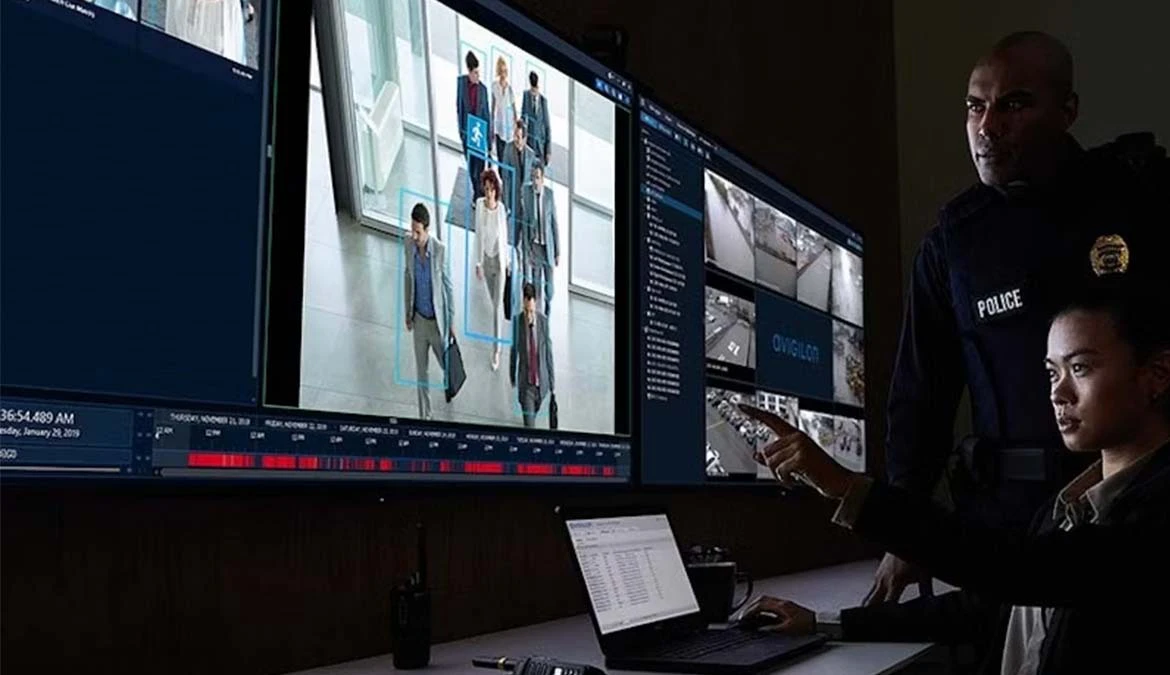
The integration of AI for workplace safety is set to become even more impactful. With ongoing technological advancements, these systems will evolve to be more intelligent, efficient and seamlessly integrated into daily operations. This shift will enable companies to transition from a reactive stance to a predictive model for safety management.
Here are some trends to watch:
Greater integration of AI with IoT and cloud systems
In the near future, AI platforms could connect every piece of equipment, wearable device and sensor. This would establish a continuous flow of real-time data to enable businesses to forecast risks with precision, making AI for workplace safety an indispensable component for security technology.
Natural language safety assistants
Conversational AI in safety will streamline data retrieval and enhance decision-making. Imagine a safety officer asking an AI system, “Show me any incidents of improper PPE use in the last month,” and instantly receiving a detailed report.
Emotion and stress detection
By leveraging advancements in computer vision and wearable sensors, AI-enabled workplace safety systems can potentially identify when employees are fatigued, distracted or stressed. This capability allows for proactive interventions and prevents accidents before they occur.
Virtual reality (VR) and AI training simulations
AI use in workplace safety will also extend into employee training. By integrating VR with AI, organizations can offer immersive safety simulations. These simulations provide workers with practical experience in navigating emergencies and avoiding hazards in realistic scenarios.
AI-powered safety audits
Future systems may autonomously audit entire facilities, ensuring compliance, analyzing safety trends and generating reports without human supervision.
Scalable solutions for small businesses
Today, many AI workplace safety tools are geared for larger organizations. However, as costs decrease, AI-powered solutions will become more attainable for small and mid-sized businesses. This will democratize AI for safety and enable companies of all sizes to enhance protection for their employees to cultivate stronger safety cultures.
Expanding beyond traditional safety risks
As AI safety technology continues to advance, its scope will expand beyond physical hazards to include wider organizational risks. Future systems could identify cybersecurity threats impacting industrial equipment or detect employee behavior patterns indicative of burnout or disengagement.
By integrating safety with overall business well-being, AI-powered workplace safety will enable organizations to foster safer and more resilient environments.
Why invest in AI for workplace safety now?
Waiting to adopt AI workplace safety technologies can be costly, as current tools already offer measurable benefits such as reduced errors and lower incident rates. However, by implementing these AI safety tools now, organizations can better protect employees and meet safety regulations.
Investing in AI-powered workplace safety goes beyond just compliance; it fosters resilience. Companies that embrace these systems gain real-time viewing, predictive insights and enhanced emergency response capabilities. Delaying adoption can result in falling behind competitors who are already seeing benefits from these systems.
Early adopters of AI-powered safety are also better positioned for future growth, as they can integrate upcoming innovations like predictive safety audits or advanced robotics without expensive overhauls. Ultimately, investing in AI today delivers major safety benefits: protecting people, ensuring business continuity and positioning the organization as a leader in workplace innovation.
Quick takeaways
Considering the benefits and examples of AI in workplace safety, here are the main points highlighted in this guide:
- AI workplace safety provides faster response times, continuous observation and predictive insights.
- They reduce risks from human error while improving compliance with safety standards.
- Tools include smart cameras, wearables, sensors and predictive maintenance.
- Future developments point toward stronger integration with IoT, smarter video analytics technology and scalable solutions.
- Early adoption helps organizations protect employees, lower costs and prepare for future advancements.
Have questions? We can help
Our video security experts can help you implement the right security system for your business.