U.K. care home security: balancing safety, privacy and law


Trusted by 100,000+ organizations globally
Key takeaways
- Care homes are shifting from basic locks to integrated CCTV and digital access control solutions.
- Security systems must meet national care standards and ICO privacy rules to avoid legal penalties.
- Intelligent security helps bridge staffing gaps by reducing the burden on overstretched care teams.
- Integrated systems provide the digital evidence required for 2026 regulatory audits and inspections.
Navigating the 2026 U.K. care home security landscape
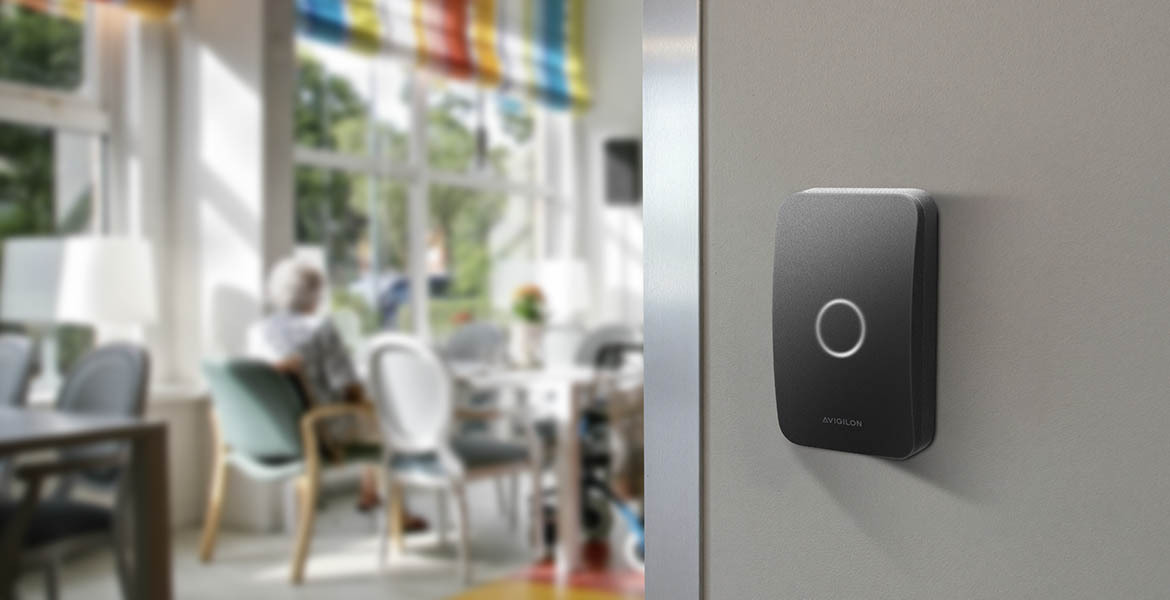
Care home security facilities have transformed into a highly sophisticated, digitally connected network.
Rather than relying on standard lock-and-key mechanisms, modern care home security systems integrate AI-powered cameras with smartphone-based access control. This unified approach allows for seamless movement for authorised personnel whilst providing the intelligent observation needed to protect restricted zones and ensure resident wellbeing.
Striking a balance between security and life
A critical aspect of modern care home security infrastructure involves harmonising protective measures with essential life safety protocols. For example, electronic door configurations must prevent residents with cognitive conditions from wandering into unsafe areas while remaining fail safe for immediate unlocking during fire emergencies.
While safety is paramount, care home CCTV systems are now subject to rigorous data protection laws. To balance resident dignity with security, many providers now use a “layered” approach:
- Visual oversight: High-definition security cameras for corridors and common areas.
- Unobtrusive observation: Intelligent sensors and radar-based artificial intelligence (AI) to detect falls or unusual patterns without capturing intrusive video in private spaces.
Economic and regulatory pressures
At large, the care home sector is navigating an intense convergence of economic and demographic strains that mark a significant departure from previous eras.
Historically, residential care was predominantly tailored toward basic assistance, but current facilities must operate as advanced clinical environments capable of managing individuals with complex health needs, such as dementia.
The most profound contrast with historical challenges lies within workforce management and sweeping legislative overhauls. The sector is currently battling a perfect storm of economic pressures:
- Surging costs: Utility and operational expenses have spiked, forcing private funding rates up by 10% over the past year alone.
- Mandatory digitisation: Providers are mandated to completely digitise all resident support documentation by early 2026.
- Workforce challenges: The government’s recent termination of new international recruitment routes for care roles has exacerbated domestic staff shortages.
CCTV in care homes: understanding U.K. law
The legal architecture regulating care home security cameras in the U.K. is highly intricate, merging human rights safeguards with stringent privacy legislation. Essential statutes encompass the U.K. GDPR and the Data Protection Act 2018. Compliance is further governed by nation-specific healthcare legislation, such as the Health and Social Care Act (England), the Regulation and Inspection of Social Care (Wales) Act and the Public Services Reform (Scotland) Act.
To remain compliant, operators must adhere to the following frameworks:
Regional Regulatory Compliance
While the Care Quality Commission (CQC) oversees England, providers in Scotland (Care Inspectorate), Wales (CIW) and Northern Ireland (RQIA) evaluate CCTV usage based on national standards of safety, transparency and person-centered care. Across all jurisdictions, key compliance factors include:
- Staffing: Technology must supplement, not replace, physical caregiving. Regulators in all four nations strictly prohibit using CCTV as a substitute for adequate staffing levels.
- Mental capacity: Providers must document rigorous “best-interests” procedures when filming residents who cannot provide consent. The Mental Capacity Act 2005 governs this in England and Wales, and the Adults with Incapacity (Scotland) Act 2000.
- Privacy by design: Under ICO (Information Commissioner’s Office) guidelines, Data Protection Impact Assessments (DPIAs) are mandatory across the entire U.K. to prove that cameras are a proportionate response to a specific risk.
Data privacy and ICO rules
As data controllers, facility managers are governed by the Information Commissioner’s Office (ICO). Compliance requires:
- Clear signage: Notices must identify the operator and the purpose of filming.
- Subject access requests: Residents or staff have the right to request footage, which must be provided within one month (with third-party faces blurred).
- Retention policies: Footage is typically deleted after 30 days unless required for an active investigation.
Failure to meet these standards can result in financial penalties of up to £17.5m or 4% of total company earnings.

Smart and secure CCTV for your care home
- High-res video and AI-powered alerts
- Industry-leading cybersecurity
- Integrates with third-party systems
- 24/7 comprehensive product support
Intelligent solutions for assisted living
Modern care home security technologies have transformed how care home facilities manage resident wellbeing, particularly by replacing the requirement for continuous, in-person supervision with highly intelligent, instantaneous alert mechanisms.
Rapid fall detection
Automated collapse recognition technologies utilise sophisticated algorithms, millimetre-wave radar or intelligent illumination to determine whether a resident has dropped to the floor.
Rather than demanding a carer to physically watch over individuals around the clock, these interconnected networks immediately transmit notifications to staff members’ digital devices the exact moment an incident takes place.
This rapid communication guarantees that vulnerable adults receive medical attention quickly, drastically minimising the distressing time they spend incapacitated and mitigating the severity of subsequent physical trauma.
Preventing wandering in dementia care
For those living with profound cognitive conditions such as dementia, the threat of straying into hazardous environments remains a paramount operational concern.
Care homes are increasingly deploying artificial intelligence paired with visual tracking to establish invisible geographical boundaries around dangerous locations, including exterior doorways, stairways or food preparation areas.
When a resident prone to roaming nears these pre-defined danger zones, the integrated security system automatically signals the care team and can even trigger electronic locks to stop the person from leaving a protected space. This proactive strategy guarantees that care workers can intervene swiftly before a crisis develops, granting people independence whilst upholding their absolute physical security.
Privacy-centric audio analysis
Care home managers are pivoting towards unobtrusive, privacy-centric solutions that preserve human dignity while guaranteeing continuous protection.
Audio observation can offer a promising solution in these visually restricted zones. Intelligent audio software continuously evaluates the ambient environment to identify irregular acoustic signatures, such as the sound of shattering glass, aggressive shouting or distressing cries, prompting an immediate staff response without ever recording a single visual frame.
Ambient sensors and hazard detection
Modern establishments utilise advanced ambient technologies to observe spatial behaviour discreetly.
Pressure-sensitive flooring mats and radar mechanisms are deployed to map mobility trends, identifying unusual pacing, detecting when a person unexpectedly leaves their mattress or predicting a potential loss of balance based on subtle changes in their stride. These tools provide crucial behavioural insights whilst keeping the individual completely anonymous.
Alongside these mobility trackers, care home security is significantly bolstered through the seamless integration of intelligent hazard detectors.
Connected smoke and heat detection devices feed directly into the central management hub, delivering instantaneous early warnings of fire hazards. By synthesising these diverse, non-visual data streams, care providers can cultivate a highly responsive, holistic safety net that fiercely defends both the physical health and the fundamental privacy rights of every single resident.

Proactively protect your site
- AI cameras to detect suspicious activity
- Secure app, web and scheduled arming
- Powerful rules engine to reduce false alarms
- 24/7 professional monitoring
Secure access control and intercom systems
Modern care homes are increasingly abandoning traditional mechanical locks in favour of sophisticated electronic access control networks to regulate the movement of personnel and guests.
Smartphone-based digital keys
At the core of this care home security transformation is the adoption of smartphone-based digital keys and their utilisation of wireless technologies like Bluetooth to seamlessly unlock doors.
By transitioning to these virtual access credentials, facility administrators gain the ability to remotely grant, adjust or instantly revoke entry permissions with no need to physically retrieve lost passes.
This digital infrastructure allows managers to implement highly customised care home security protocols, restricting entry to specific zones based on an individual’s exact job function, the day of the week or the specific time of their shift.
As a result, sensitive locations such as pharmaceutical storage cupboards, private resident bedrooms and administrative offices remain tightly secured against unauthorised personnel.
Digital reporting and transparent security
This networked approach is no longer limited to main corridors and exterior doorways. Advanced wireless locking devices can now be retrofitted onto smaller enclosures, including mobile clinical trolleys and personal bedside cabinets.
As every interaction with these electronic locks requires authentication, the infrastructure auto-generates comprehensive entry logs. This continuous digital reporting provides a transparent footprint of staff movements, which is invaluable for investigating care incidents, ensuring regulatory privacy compliance and demonstrating that vulnerable residents and critical medical resources are being protected.
Contactless visitor management
Care home security platforms now allow contactless guest administration to manage external arrivals.
Before arriving at the premises, visitors can supply their details online and receive a unique scannable barcode directly to their personal devices. At the facility, guests simply present this digital barcode to a scanner, or use facial recognition, to seamlessly register their presence with no need to touch shared logbooks or screens.
This action immediately alerts the relevant staff member that their visitor has arrived while simultaneously updating accurate, real-time building occupancy records.
Alongside these automated platforms, networked video intercoms play a crucial role, particularly during out-of-hours periods when main entrances might be secured.
These visual communication devices allow remote personnel to identify callers, assess their intentions and provide clear directions before remotely disengaging the locks. Intercom units can also be extended to exterior spaces, such as parking spots, to regulate barrier entry and provide an immediate communication lifeline for arriving visitors.
Integrating HR and emergency protocols
The best results are achieved by linking these entry systems with broader care home security management software. Syncing access data with human resources platforms enables seamless shift monitoring, ensuring that carer working hours are recorded accurately based on the exact moments they enter and exit the building.
Most importantly, these access networks must be harmonised with life safety infrastructure. During a crisis, such as a fire, an interconnected care home security system can instantly generate an occupancy list to assist with emergency roll-calls, while programmed fail-safes guarantee that electronic locks automatically release, allowing unobstructed evacuation for everyone inside.
U.K. care home security FAQs
Have questions? We can help
Our video security experts can help you implement the right security system for your business.