Lockout vs. lockdown: Key differences for school security

Trusted by 100,000+ organizations globally
Developing, maintaining and updating school security measures is essential for educators and safety leaders. To help staff and students stay focused on learning, schools must have clear, reliable plans to respond to safety threats.
School lockouts and building lockdowns are two core components of these plans. However, they’re often confused or used interchangeably. This guide breaks down the key differences between school lockout vs. lockdown to help decision-makers implement more effective and informed safety strategies.
Lockout vs. lockdown: A side-by-side comparison
Understanding the specific purposes and procedures of lockouts and lockdowns is crucial for effective emergency planning. The following table highlights the key differences between the two safety measures:
| Lockdown | Lockout | |
|---|---|---|
| Purpose | To secure occupants inside the building from an active threat on the premises. | To secure the exterior of a building in response to an active threat outside the premises. |
| Trigger event | Harmful or illegal activities occurring on-site, (e.g., active shooters, weapons found on the premises, intruders). | Potentially harmful events occurring in the local area, (e.g., nearby police activity, suspicious persons, local crimes). |
| Involved responses | Lock and barricade interior doors, shelter occupants in place, switch lights off, limit communications, contact local authorities, observe school security systems, wait for the all clear signal. | Bring occupants who are outside into the building, lock exterior doors, observe outdoor security devices (e.g., cameras, entry systems), check police feeds and maintain normal activities indoors. |
| Access requirements | Lock and barricade all interior access points and ensure first responders can access exterior doors. | Lock all exterior access points, maintain controlled access to low-risk internal areas like staff and class rooms. |
| Impact on activities | All normal activities are halted and all occupants are instructed to shelter in place until the lockdown is lifted. | Limited activity, occupants remain indoors and risks are continuously assessed. |
| Use cases | Schools, commercial offices, hospitals, factories, oil and gas sites, government buildings, retail spaces. | Schools, commercial offices, hospitals, factories, oil and gas sites, government buildings, retail spaces. |
The main difference between lockouts and lockdowns
The difference between a lockout and a lockdown can be subtle, as both aim to protect occupants from external or internal threats. To clarify the distinction, it helps to consider the situation from the occupant’s perspective.
What is a lockout in school?
A school lockout is a preventative measure. During a lockout in school, occupants lock and secure all exterior access points to prevent nearby threats from moving into the building. The goal is to keep out any person or threat who may try to gain entry.
What is a lockdown in school?
A school lockdown is a responsive measure. During a school lockdown, occupants lock and secure all interior access points in response to threats already present in the building. The goal is to remain inside, secure the location and wait for first responders to arrive.
Why the difference between lockouts and lockdowns matters
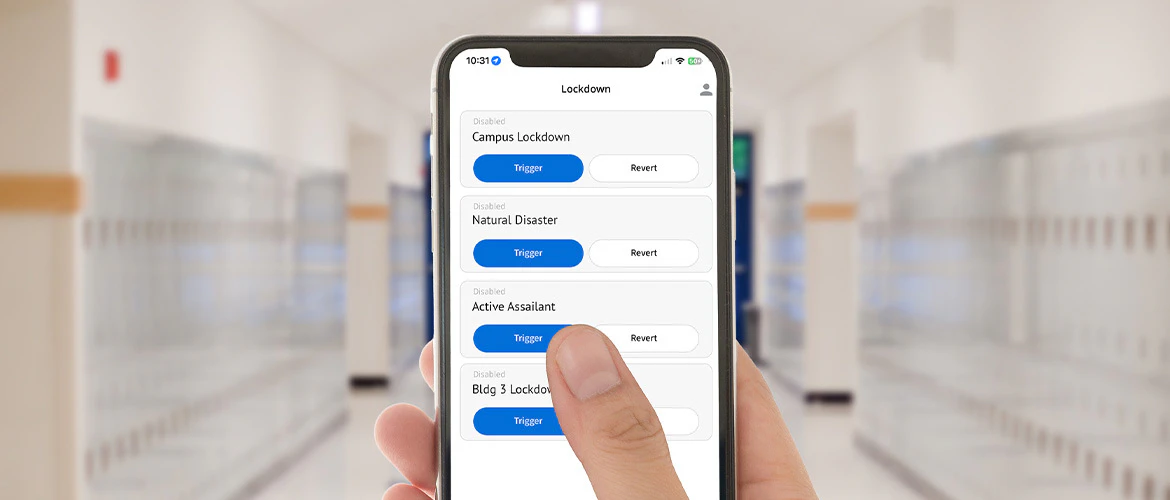
In an emergency, every second counts and confusion can make a dangerous situation worse. It’s critical for all occupants to understand the difference between a lockdown and a lockout. While the terms sound similar, they trigger very different responses.
Research suggests almost 40% of people struggle to think clearly during high-stress situations. Clear protocols offer simple cues that help people respond quickly and appropriately under pressure.
Lockdown and lockout procedures offer shorthand instructions to warn occupants of threats and help them act quickly with limited information. However, misinterpreting one type of alert for another can expose people to severe risks. Knowing the difference allows stakeholders to:
- Improve incident response times: When occupants can quickly recognize both lockout and lockdown alerts, they can begin following emergency procedures immediately. This helps reduce risk and respond in a safe, organized way.
- Enact risk-appropriate responses: Responding incorrectly to a threat can create new dangers, for example, accidentally locking an intruder inside the building. To avoid this, occupants must be able to quickly distinguish between lockout and lockdown alerts through clear, distinct signals.
- Reduce confusion during key moments: School safety experts emphasize that the first 2 to 3 minutes of a security response are critical. When everyone understands what’s happening and how to respond, it helps prevent panic and supports a more coordinated reaction.
- Limit disruption to normal activities: While safety is the priority, minimizing unnecessary interruptions can help keep people calm and reduce long-term impacts. For example, during a school lockout, classes may continue as usual to help ease anxiety and maintain a sense of normalcy.
- Integrate school security systems effectively: Lockdowns and lockouts often require different security device responses. Understanding the distinction helps teams design customized automatic responses and ensures operators focus on the most relevant camera feeds and systems during an incident.
- Improve emergency preparedness: Regular lockdown and lockout drills in schools help occupants stay familiar with safety protocols and allow staff to update and refine emergency response systems and plans based on real-time learnings.
- Maintain regulatory compliance: Federal and state regulations require schools to develop and maintain emergency response plans. In fact, at least 37 states mandate schools to perform lockdown and lockout drills at least once per year.
- Support post-incident investigations: Documented procedures for lockdowns and lockouts help streamline reviews after an incident. Investigators can quickly identify which devices, footage or access logs to analyze. This helps save time and improve accuracy.

Simplified, secure access for your buildings
- Flexible entry methods including key fobs, cards, mobile credentials and more
- Easy-to-use cloud software with remote management from any device
- Unlimited integration capabilities to get the most out of your system
- Trusted globally by over 100,000 organizations
Key technologies that support lockouts and lockdowns
Developing and refining effective lockout vs. lockdown procedures requires leaders to focus on organizational and technological measures. The intelligent use of critical security devices like cameras, alarms and access systems can significantly enhance responses.
Access control systems
Access control systems enable security teams to remotely lock entry points and capture live records of access events. These systems can be programmed to instantly lock doors based on broader security inputs, for example, triggered motion or noise sensors installed around the site.
Access control is central to enabling distinct responses to lockdowns and. lockouts. One of the key differences between the two is which access points need to be secured. These systems allow staff to lock specific doors in response to interior or exterior threats, such as during a building lockout.
Video security cameras
During both school lockouts and lockdowns, it’s vital that leaders inside the building can observe events from safe locations. To improve situational awareness, staff can remotely access school security cameras installed in key areas around the site through a cloud management platform.
Modern cameras equipped with AI video analytics can also trigger lockdowns and lockouts automatically, while AI software can detect risks such as weapons, unusual motion and violent behavior. These detections can serve as triggers to lock select doors in response to a lockout in school or other threats.
Communication solutions
Mass notification systems ensure occupants receive timely alerts about building lockout and lockdown orders. Unique messages can be programmed for lockdowns vs. lockouts, with alerts broadcast through speakers, mobile apps and computer networks.
Keeping all relevant parties informed, both inside and outside the premises, is crucial during school lockouts and lockdowns. Staff must be able to communicate securely to adapt procedures as situations evolve and to contact law enforcement if necessary.
Site protection systems
Site protection systems use cameras and sensors to identify and respond to security threats. AI-powered cameras, combined with sound, motion and pressure sensors, can automatically activate lockouts or lockdowns based on detected intrusion events.
Different responses can be tailored depending on the location of triggers, reflecting the difference between lockout and lockdown protocols. For example, gunshots detected inside the building can immediately initiate a lockdown, enabling staff to act swiftly.
Panic buttons, smart sensors and alarms
School panic buttons and audible alarms around the property can both trigger emergency responses and alert occupants of threats. These include sound sensors capable of detecting gunshots or specific keywords, as well as tactile buttons installed in classrooms.
In some cases, the first witness to a threat may need to raise an alarm discreetly to avoid alerting attackers. App-based panic buttons support this need by sending silent alarms and detailed alerts to internal security teams and local authorities.

Need help with your school security project?
Trusted by 100,000+ organizations worldwide, Avigilon’s easy-to-use security cameras, access control, smart sensor and safety solutions offer future-proof flexibility to fit every business.
Improving school security with better lockdown and lockout planning
Security experts agree that the first 2 to 3 minutes of a security incident are critical, making swift and precise action essential for school safety leaders. By leveraging tools such as smart AI cameras, access readers and alarms, schools can create and activate tailored responses to specific threats.
Understanding the difference between lockout and lockdown is more than just terminology. Activating the wrong procedure during a building lockout or school lockout can put occupants at risk. Whether it’s a lockout drill or an actual emergency, clearly defined, data-driven protocols help ensure the right measures are taken immediately.
Have questions? We can help
Our video security experts can help you implement the right security system for your business.